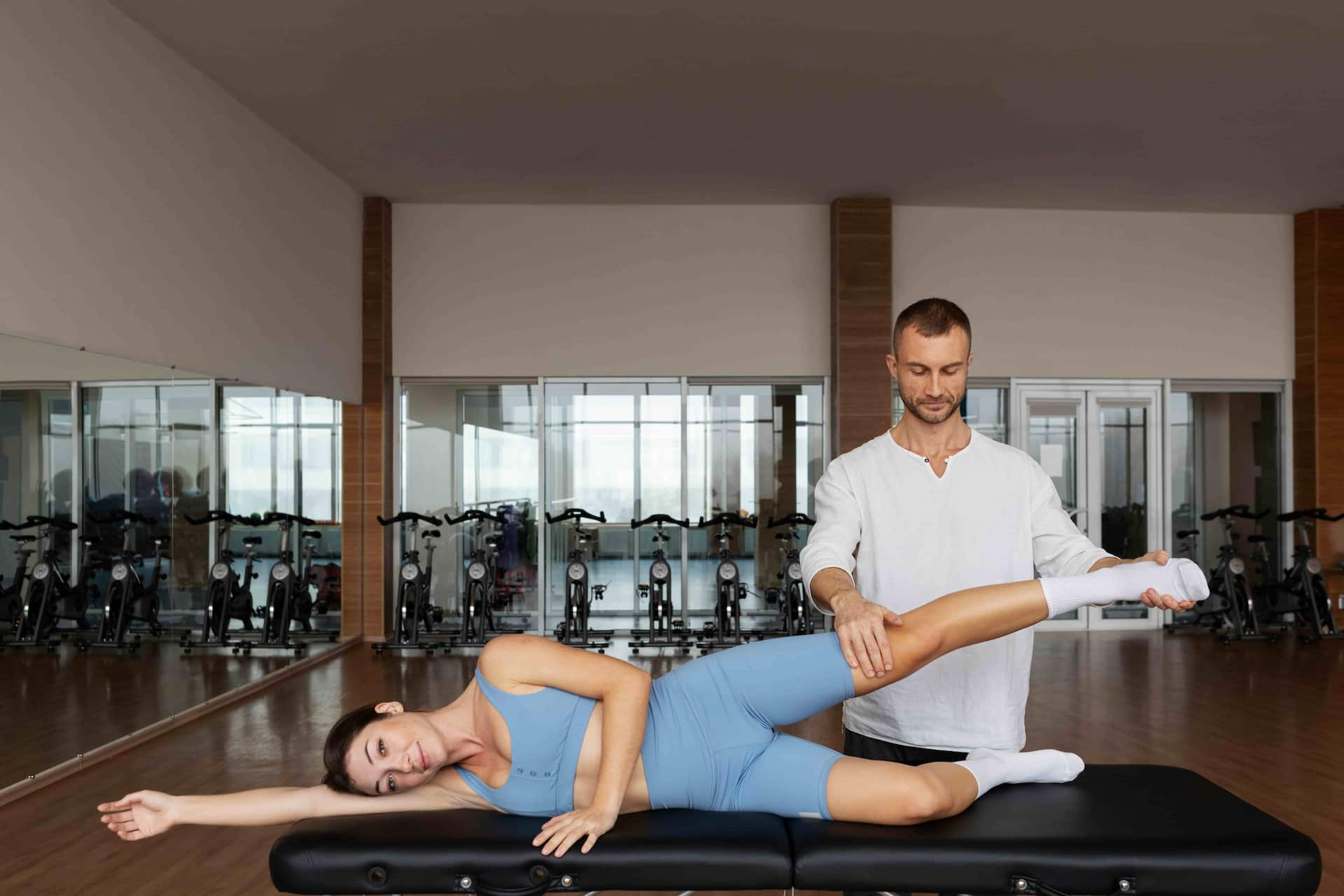
Hip pain often starts in the lower back or pelvis rather than the hip joint itself. At Freehold Chiropractic, I evaluate the whole chain of joints from the spine to the feet, because treating hip symptoms without checking the spine often means missing the actual problem.
Your Hip Doesn’t Work in Isolation
When patients come to me with hip pain, they usually expect me to focus entirely on their hip, and I do examine it thoroughly. But here’s what surprises many people: after 27 years and over 185,000 adjustments, I’ve found that a significant percentage of hip pain cases involve the lower back, pelvis, or sacroiliac joint.
Your body is a connected system. The hip joint sits directly below your lumbar spine and pelvis, nerves from your lower back travel through your hip region and down your leg, and the muscles that move your hip attach to your spine and pelvis. When something goes wrong in one area, it creates compensation patterns that show up as pain somewhere else.
That’s why I take a full-body approach at my Freehold practice. Treating the hip alone when the spine is the source rarely produces lasting results.
Why Back Problems Create Hip Pain
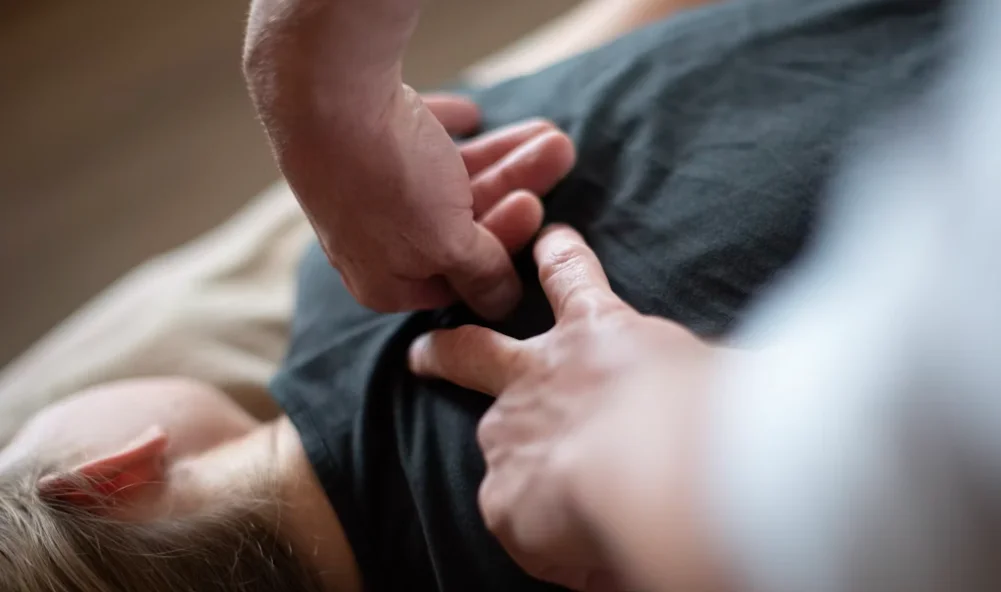
The lumbar spine and hip share more than just proximity. Several mechanisms explain how spinal problems show up as hip pain.
Referred pain from lumbar nerves is very common. The nerves exiting the upper part of your lower spine, especially L1 to L3, supply sensation to the hip, groin, and upper thigh. When these nerve roots are irritated by a herniated disc or a spinal joint problem, you can feel pain in the hip even though the hip itself is fine. I explain this in more detail in my post on referred pain.
Sacroiliac joint dysfunction creates pain that patients often describe as “deep in the hip” or in the buttock. The SI joint connects your sacrum, at the base of your spine, to your pelvis. When it’s not moving properly, the pain pattern can closely mimic hip joint problems.
Muscle imbalances from spinal issues force your hip to compensate. If your lower back isn’t moving well, your hip picks up the slack, and over time that extra demand creates pain, tightness, and dysfunction in the hip, a secondary problem caused by a spinal issue.
Altered walking patterns develop when you unconsciously protect a painful back. You might shift your weight, shorten your stride, or rotate your pelvis differently, and your hip absorbs those changes with every step.
Signs Your Hip Pain Might Be Coming From Your Back
Certain patterns suggest a spinal origin for your hip symptoms:
- Pain that starts in your lower back and travels into your hip, buttock, or groin
- Hip pain along with back pain, even if mild
- Symptoms that change when you bend, twist, or arch your back
- Numbness or tingling along with the hip pain
- Pain that wraps around from your back to your hip
- Morning stiffness in both your back and hip that improves with movement
- Hip pain that doesn’t respond to typical hip treatments
If any of these sound familiar, your hip might be the victim rather than the culprit.
When Hip Pain Actually Comes From the Hip
Of course, sometimes hip pain really does come from the hip joint or the structures around it. Conditions I commonly see include:
Hip osteoarthritis causes pain with weight-bearing, stiffness, and reduced range of motion. It typically develops gradually and often shows up as groin pain.
Bursitis involves irritation of the fluid-filled sacs cushioning your hip. Trochanteric bursitis causes pain on the outside of the hip, especially when lying on that side.
Hip labral tears often cause catching, clicking, or locking along with pain deep in the hip or groin.
Muscle strains around the hip, including the hip flexors, adductors, and gluteal muscles, cause localized pain that worsens with specific movements.
The key is a proper evaluation to find the actual source. That’s why I spend time with each patient rather than rushing through a quick exam.
How I Evaluate Hip Pain in My Freehold Practice
My exam looks at the complete picture. I start with your history: when the pain started, what makes it better or worse, any injuries or accidents, and how it’s affecting your daily activities and sleep.
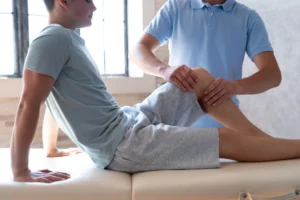
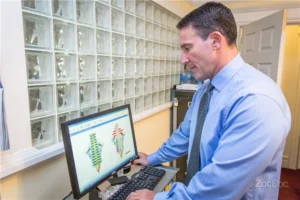
The physical exam includes orthopedic tests for both the hip joint and the lower back. I assess your range of motion, muscle strength, and nerve function, watch how you walk and stand, check your pelvis for asymmetry, and test how your sacroiliac joints move.
This takes more time than a quick “where does it hurt” exam, but it’s the best way to tell whether you’re dealing with a true hip problem, a spinal problem referring pain to the hip, or a combination of both.
Treatment That Addresses the Real Problem
Once I understand the source of your hip pain, treatment becomes much more effective. At Freehold Chiropractic, my approach typically includes:
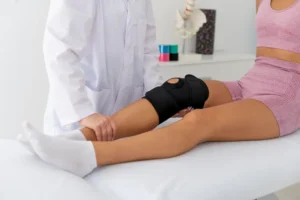
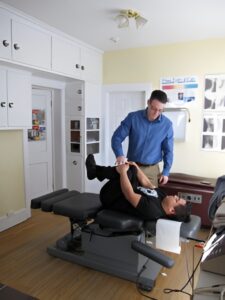
Chiropractic adjustments to restore better alignment and movement. If your lower back or SI joint is involved, I address those areas directly. For true hip joint restrictions, I use specific extremity adjustments to improve hip mobility.
Soft tissue work releases tight muscles contributing to the problem. The hip flexors, piriformis, and gluteal muscles often need attention alongside the joints.
Therapeutic stretching targets the specific muscle imbalances found during your exam, and I’ll teach you stretches to continue at home between visits.
Postural correction addresses standing and sitting habits that stress your lower back and hips. Small changes in how you hold yourself can make a significant difference.
Custom orthotics may be recommended if foot mechanics are contributing to your hip or back problems. Your feet are the foundation, and when they’re not supporting you properly, the effects travel up through your knees, hips, and spine. I use Foot Levelers to create custom support based on your needs.
My Own Experience With Hip and Back Pain
I understand hip and back pain from personal experience. During my 28 years playing competitive soccer, I dealt with a lower back injury that sidelined me. The pain affected everything: my movement, my performance, and my quality of life.
Chiropractic care brought me quick and lasting relief, and that experience shapes how I treat my patients today. I know what it’s like to be unable to do the activities you love because of pain.
What Improvement Looks Like
Many patients notice changes within the first few weeks of care. The timeline depends on what’s causing your pain and how long you’ve had it, since a recent muscle strain responds faster than years of built-up spinal dysfunction.
What I tell patients is that the goal isn’t just ending your current pain. It’s restoring proper function so the problem doesn’t keep returning, and that means addressing the underlying cause, not just chasing symptoms.
FAQs About Hip Pain and Chiropractic Care
Can a chiropractor adjust my hip?
Yes. Extremity care is part of my full-body approach, and hip adjustments can restore better joint movement and reduce pain when the hip itself is restricted.
Should I see a chiropractor or orthopedist for hip pain?
For many people, starting with a chiropractor makes sense. I’ll evaluate whether your pain is mechanical or whether imaging and a specialist referral are needed, and I’ll tell you directly if you need an orthopedic evaluation.
How can I tell if my hip pain is serious?
Seek immediate care for severe pain after a fall, inability to bear weight, a leg that looks shortened or turned outward, or fever with hip pain, since these can signal a fracture or infection. Loss of bladder or bowel control, or numbness in the groin, needs emergency care right away.
Stop Chasing the Wrong Problem
If you’ve been treating hip pain without lasting results, the source might not be where you think. Call (732) 780-0044 or book online to schedule an evaluation at Freehold Chiropractic, and let’s find out what’s really going on. We serve Freehold, Monmouth County, and surrounding communities with care that looks at the whole picture.
Dr. Russell Brokstein is a lifelong Freehold resident and a seasoned chiropractor dedicated to helping patients achieve optimal health through holistic, drug-free care. With a Biology degree from Penn State and a Doctor of Chiropractic from Life Chiropractic College West, Dr. Brokstein’s passion for chiropractic began when his own recurring bronchial issues and a sports-related back injury were resolved through chiropractic adjustments. This transformative experience inspired him to focus on full-body treatments, therapeutic stretching, nutritional counseling, and stress reduction therapies to help others recover faster and perform better. Recognized as one of America’s Best Chiropractors, he leads Freehold Chiropractic with a patient-centered approach that emphasizes thorough evaluations, minimal wait times, and personalized care for athletes and families in Freehold, NJ.