For many people with a lumbar herniated disc, chiropractic care and nerve root injections can produce similar improvement, and chiropractic care tends to cost less and carries fewer risks. A study of 102 patients with MRI-confirmed lumbar disc herniations found that about 76% of chiropractic patients reported improvement, compared with about 63% of patients who received injections, with lower treatment costs in the chiropractic group. That makes conservative chiropractic care a sensible first option for many patients, with injections or surgery available if needed.
Why This Question Matters
Up to 80% of adults experience back pain at some point, and lumbar disc herniations are a common cause, especially when pain travels into the leg. People in pain understandably want the most effective treatment.
Many patients see orthopedic or pain management doctors, who often recommend procedures like steroid nerve root injections. Those can help some patients, but they also carry risks and costs. So it’s fair to ask: how does chiropractic care compare?
What a Herniated Disc Is
The discs between your vertebrae act as shock absorbers. Each one has a tough outer layer and a softer inner material. When that outer layer weakens or tears, the inner material can push outward and press on a nearby nerve root.
That pressure can cause lower back pain, as well as pain, numbness, or tingling that travels into the buttock and leg, often called sciatica. Many herniations improve over time, which is one reason conservative care is usually the first step.
What the Research Found
A study published in the Journal of Manipulative and Physiological Therapeutics compared 102 patients with MRI-confirmed lumbar disc herniations. Half were treated with chiropractic spinal adjustments, and half received imaging-guided nerve root injections. The groups were matched by age and sex. You can read the details of the study.
Here’s what the researchers found:
- Improvement: about 76% of chiropractic patients reported feeling improved after treatment, compared with about 63% of patients receiving injections.
- Pain: 60% of chiropractic patients had a significant reduction in pain, compared with 53% of injection patients.
- Cost: treatment costs were about 23% lower in the chiropractic group.
It’s important to read these results honestly. The researchers concluded that the two treatments were similarly effective, since the differences in improvement and pain weren’t large enough to call one clearly better. The study was also observational rather than a randomized trial, so patients weren’t randomly assigned to each treatment.
Still, the takeaway is meaningful. A conservative, drug-free approach produced results comparable to injections at a lower cost, and in a country where healthcare spending is so high, that matters.
How the Two Approaches Differ
Steroid injections work by placing anti-inflammatory medication near the irritated nerve root. That can calm inflammation and ease pain, sometimes quickly. But injections don’t change how your spine moves or carries load, and they come with possible side effects and limits on how often they can be repeated.
Chiropractic treatment takes a different approach. Instead of focusing only on calming the symptoms, it aims to improve how the spine and pelvis move, reduce stress on the injured disc, and ease pressure on the nerve. That way, you’re working on the mechanical problem behind the pain, so you can get back to your normal daily activities.
How I Treat Herniated Discs
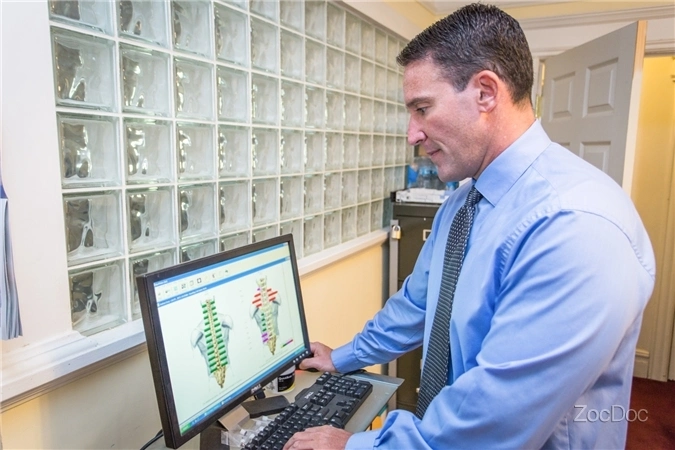
At Freehold Chiropractic in Freehold, NJ, I start with a thorough exam to confirm where the disc problem is and how much the nerve is affected. I test reflexes, strength, and sensation, and I review any MRI you already have.
Care typically combines gentle spinal adjustments adapted for disc injuries, therapeutic stretching for the hips and lower back, and specific exercises to strengthen the core and protect the disc going forward. I avoid positions and movements that would increase pressure on the injured disc.
What You Can Do at Home
- Stay gently active. Short walks usually help more than long periods of bed rest.
- Break up sitting. Long stretches in a chair increase disc pressure, so stand up and move every 30 minutes.
- Lift with your legs. Bend at the hips and knees, and avoid twisting while carrying a load.
- Notice what eases your leg pain. If certain positions reduce symptoms, share that at your visit. It helps guide treatment.
When Injections or Surgery Make Sense
I’m not against injections. For some patients with severe pain that isn’t improving, an injection can calm things down enough to make other care possible. And some herniated discs do need surgery.
Go to the emergency room right away if you lose control of your bladder or bowels, notice numbness in the groin, or develop rapidly worsening leg weakness. A surgical evaluation also makes sense for weakness that keeps progressing or severe pain that doesn’t improve after a fair trial of conservative care. If I see those signs, I’ll refer you right away.
Frequently Asked Questions
Is chiropractic safe for a herniated disc?
For most people, yes, when the technique is adapted to the injury. I use gentle methods and screen for warning signs before treatment.
How long does a herniated disc take to improve?
Many patients notice improvement within several weeks, while more significant herniations can take a few months. Your timeline depends on the size of the herniation and how long you’ve had symptoms.
Should I try chiropractic before getting an injection?
For many people without emergency signs, trying conservative care first makes sense. Injections and other treatments remain options if you don’t improve.
Chiropractors like Dr. Russell Brokstein at Freehold Chiropractic help patients with herniated discs find conservative, safe, and cost-effective relief. If you’re dealing with disc-related back or leg pain, call (732) 780-0044 or contact us online to schedule an evaluation.
Dr. Russell Brokstein is a lifelong Freehold resident and a seasoned chiropractor dedicated to helping patients achieve optimal health through holistic, drug-free care. With a Biology degree from Penn State and a Doctor of Chiropractic from Life Chiropractic College West, Dr. Brokstein’s passion for chiropractic began when his own recurring bronchial issues and a sports-related back injury were resolved through chiropractic adjustments. This transformative experience inspired him to focus on full-body treatments, therapeutic stretching, nutritional counseling, and stress reduction therapies to help others recover faster and perform better. Recognized as one of America’s Best Chiropractors, he leads Freehold Chiropractic with a patient-centered approach that emphasizes thorough evaluations, minimal wait times, and personalized care for athletes and families in Freehold, NJ.