One of the most confusing things about pain is that it doesn’t always show up where the actual problem is. You feel it in your knee, but the source is your hip. You feel it in your arm, but it’s coming from your neck. This is called referred pain, and understanding it explains why so many people chase the wrong spot for months without relief. At Freehold Chiropractic, identifying where pain is truly coming from is often the difference between endless frustration and finally getting better.
What Is Referred Pain?
Referred pain is pain felt in one part of the body that’s actually being caused by a problem somewhere else. The classic medical example is a heart attack causing pain in the left arm and jaw, even though the heart is the source. The same principle applies throughout the musculoskeletal system, just less dramatically.
The reason comes down to how your nervous system is wired. Nerves from different areas of the body share pathways as they travel to the spinal cord and brain. When the brain receives a pain signal along one of these shared pathways, it doesn’t always pinpoint the exact source correctly, and it interprets the signal as coming from a different area that uses the same route.
The result is that you can have a genuine problem in one location while feeling the pain in another, sometimes several inches away or more.
Referred Pain vs. Radiating Nerve Pain
Clinicians often separate two related patterns. Referred pain usually feels deep, achy, and hard to pinpoint, and it comes from joints, muscles, or organs. Radiating nerve pain, sometimes called projected pain, comes from an irritated nerve root and tends to feel sharp, shooting, or electric, often with numbness or tingling along a narrow path.
Both mean the painful spot isn’t the real source, and both point the evaluation back toward where the problem starts.
Common Examples of Referred Pain I See
Hip Problems Felt in the Knee
This is one of the most common patterns. Hip joint problems frequently refer pain down into the knee or thigh. Patients come in convinced they have a knee problem, but the knee is fine and the hip is the real source. Treating only the knee in these cases does little because the problem was never there.
Neck Issues Causing Arm and Hand Symptoms
Nerve roots in the neck supply the shoulder, arm, and hand. When one is irritated, symptoms travel along the path that nerve supplies, showing up as pain, numbness, or tingling in the arm or hand. People often assume they have a shoulder or wrist problem when the actual issue is in the neck.
Lower Back Problems Felt in the Buttock and Leg
Sciatica is a well-known example. An issue in the lower spine, where the sciatic nerve begins, can send pain down through the buttock and leg, sometimes to the foot. The leg hurts, but the leg isn’t the problem. The lower back is.
Trigger Points Referring Pain
Tight knots in muscles, called trigger points, have well-mapped patterns of referring pain to other areas. A trigger point in the shoulder muscles, for instance, can send pain up into the head and contribute to headaches. A trigger point in the hip can refer pain down the leg.
Why Referred Pain Causes So Much Wasted Time and Money
Here’s the practical problem. When pain shows up in a particular spot, our instinct is to treat that spot. We rub it, ice it, stretch it, and rest it. If the pain is referred, none of that addresses the actual source, so relief is minimal or temporary at best.
I’ve seen patients spend months treating a knee that was never the problem, or chasing arm pain with wrist braces when the issue was in their neck the whole time. The pain kept coming back because the real source was never addressed. That’s exactly why a thorough evaluation that looks beyond the painful spot matters so much.
How We Track Down the Real Source
At our Freehold practice, identifying the true source of pain is a core part of the evaluation. Rather than assuming the painful area is the problem, I work to trace the pain back to its origin.
Comprehensive History
How the pain behaves tells me a lot. When did it start? What makes it better or worse? Does it move or travel? Does it follow a particular pattern? Referred pain often has telltale features that point away from the painful spot and toward the actual source.
Physical Examination
I assess not just where it hurts, but the regions connected to it through the nervous system and the chain of joints that work together. For knee pain, that means examining the hip and lower back. For arm symptoms, it means examining the neck and shoulder. For leg pain, it means examining the lower back and pelvis.
Provocation and Relief Testing
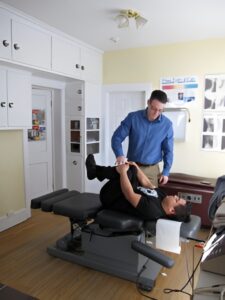
By applying specific movements and pressures, I can often reproduce or ease the referred pain by working on the suspected source. If pressing on or moving the hip changes the knee pain, that tells me the hip is involved, even though the knee is what hurts.
How Chiropractic Care Addresses Referred Pain
Once we’ve identified the true source, treatment targets that origin rather than chasing the symptom. Our chiropractic care addresses the spinal misalignments, joint dysfunction, and muscle imbalances that generate referred pain.
When the actual source is addressed, the referred pain often improves, sometimes surprisingly quickly compared to how long the patient struggled while treating the wrong area. That “how was that the problem all along?” moment is one of the most satisfying parts of this work.
Hip pain is a perfect example of how a problem in one area can show up as pain in another, which is why I always check the spine, pelvis, and hips together.
When Referred Pain Is a Medical Emergency
One important caveat. While most referred pain in the musculoskeletal system isn’t dangerous, certain patterns can signal serious medical problems. Pain spreading to the left arm and jaw can indicate a heart problem. Pain under the right shoulder blade can come from the gallbladder, and pain in the side of the back can come from the kidneys.
That’s why an accurate evaluation matters. If I see a pain pattern that suggests something outside the scope of chiropractic care, I’ll refer you to the appropriate medical provider right away. Call 911 for sudden chest pain or pressure, shortness of breath, or pain spreading to the arm or jaw. See a doctor promptly for pain with fever, nausea, or unexplained weight loss.
Frequently Asked Questions
How do I know if my pain is referred or coming from the spot that hurts?
It’s hard to know on your own. Clues include pain that doesn’t respond to treating the painful area, pain with no clear local injury, and pain that travels, so a proper evaluation is the reliable way to tell.
Can referred pain go away completely?
Often, yes. When the true source is identified and treated, referred pain usually improves, which is why finding the origin matters more than treating where it hurts.
Is referred pain the same as nerve pain?
Not exactly. Referred pain is usually deep and achy, while irritated nerve pain tends to be sharp or shooting with numbness or tingling, though both can mean the problem started elsewhere.
Stop Chasing Pain in the Wrong Place
If you’ve been treating a painful area with little success, the real source may be somewhere else entirely. Let’s find out where your pain is actually coming from. Call Freehold Chiropractic at (732) 780-0044 or book an evaluation online. New patients can take advantage of our $49 comprehensive exam.
Dr. Russell Brokstein is a lifelong Freehold resident and a seasoned chiropractor dedicated to helping patients achieve optimal health through holistic, drug-free care. With a Biology degree from Penn State and a Doctor of Chiropractic from Life Chiropractic College West, Dr. Brokstein’s passion for chiropractic began when his own recurring bronchial issues and a sports-related back injury were resolved through chiropractic adjustments. This transformative experience inspired him to focus on full-body treatments, therapeutic stretching, nutritional counseling, and stress reduction therapies to help others recover faster and perform better. Recognized as one of America’s Best Chiropractors, he leads Freehold Chiropractic with a patient-centered approach that emphasizes thorough evaluations, minimal wait times, and personalized care for athletes and families in Freehold, NJ.