Sprains and strains sound alike and get mixed up constantly, but they injure different tissues. A sprain is a stretched or torn ligament, the tissue that connects bone to bone, while a strain is a stretched or torn muscle or tendon. They share many symptoms, but knowing which you have helps you recover the right way.
The Core Difference
The simplest way to keep them straight is by what gets hurt.
A sprain affects a ligament, the tough band connecting one bone to another. A strain affects a muscle or the tendon that anchors that muscle to bone. Same idea of overstretched or torn tissue, just different structures.
That distinction matters because ligaments, muscles, and tendons heal at different rates and respond to slightly different care.
What a Sprain Feels Like
Sprains happen when a joint is forced beyond its normal range, like rolling an ankle or landing awkwardly.
You’ll often feel pain right around the joint, along with swelling and sometimes bruising. Many people also notice the joint feels unstable or wobbly, since the ligament that normally holds it steady is now injured. Ankles, wrists, and knees are common spots.
What a Strain Feels Like
Strains involve the muscle or tendon, often from overstretching, overuse, or a sudden forceful contraction.
Instead of joint instability, you’re more likely to feel muscle pain, spasms, tightness, and weakness in the affected area. Lower back strains and hamstring strains are ones I see often, especially in people who ramped up activity too quickly.
How to Treat Both in the Early Stage
In the first day or two, sprains and strains are handled similarly.
Rest the area without going completely immobile. Ice helps control swelling in those early hours. Gentle compression and keeping the area elevated when possible also ease swelling. The goal early on is to calm the initial inflammation.
Avoid the urge to push through a hard workout on a fresh injury. That’s a fast way to turn a minor tear into a longer recovery.
Where the Recovery Paths Differ
Once you’re past those first couple of days, the approaches diverge a little.
A sprained ligament often needs support and gradual, careful reloading so the joint regains stability. A strained muscle usually benefits from gentle movement and progressive strengthening as it heals. Rushing either one tends to backfire.
For sports-related injuries in particular, a structured recovery plan matters. That’s a core part of our sports and performance care here in Freehold, where the aim is getting you back to activity without setting up the next injury.
How Chiropractic Care Fits In
You might not think of a chiropractor for a sprain or strain, but there’s a real role here.
When you injure one area, your body compensates, and those compensations can pull joints out of alignment and overload other muscles. At our Freehold practice, we look at how the injury is affecting your overall movement, not just the sore spot.
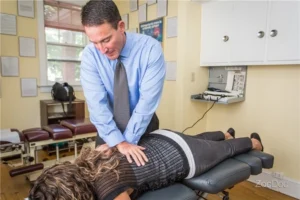
Gentle chiropractic adjustments and soft tissue work help restore proper motion and reduce the compensation patterns that slow healing. This matters most when a sprain or strain hasn’t fully bounced back on its own.
When It’s More Than a Simple Sprain or Strain
Most sprains and strains heal with time and sensible care. Some signs mean you should get it checked.
If you can’t put weight on the joint, heard a pop at the moment of injury, see significant swelling or deformity, or the pain isn’t improving after a couple of weeks, have it evaluated. A more serious tear or fracture needs proper attention, and I’ll refer you if that’s what the situation calls for.
Frequently Asked Questions
Which heals faster, a sprain or a strain?
It depends more on severity than on type. A mild strain or sprain may settle in a couple of weeks, while a more significant tear of either kind can take much longer. How well you manage the early stage makes a real difference.
Can I still exercise with a sprain or strain?
Total rest usually isn’t the answer, but neither is pushing hard. Gentle, pain-free movement as it heals is ideal, while aggressive training on a fresh injury tends to prolong recovery. When in doubt, get guidance first.
Dealing with a sprain or strain that isn’t bouncing back? Let’s get you moving properly again. Call Freehold Chiropractic at (732) 780-0044 or book your appointment today.