
Pain that starts in your neck and travels down your arm, sometimes with tingling, numbness, or weakness in your hand, is one of the most concerning symptoms patients bring to our Freehold practice. The condition is called cervical radiculopathy, and it happens when a nerve root in the neck is compressed or irritated. The good news is that most cases improve with conservative care, including chiropractic care, without surgery, especially when treatment starts early.
What Is Cervical Radiculopathy?
Your cervical spine, the part of your spine running through the neck, has seven vertebrae. Between each pair, nerve roots exit and travel out to supply sensation and muscle control to specific parts of the shoulder, arm, and hand.
When one of these nerve roots becomes compressed or irritated, symptoms travel along the path that nerve supplies. The result is pain, numbness, tingling, or weakness somewhere in the shoulder, arm, or hand, depending on which nerve root is involved.
Different nerve roots produce different patterns. For example, C6 radiculopathy often causes symptoms into the thumb and index finger, while C7 radiculopathy tends to involve the middle finger. Identifying which nerve is affected helps target treatment precisely.
Common Symptoms of Cervical Radiculopathy
- Sharp or burning pain spreading from the neck into the shoulder, arm, or hand
- Numbness or tingling in specific fingers or parts of the hand
- Weakness in arm or hand muscles
- Pain that worsens with certain neck positions or movements
- Difficulty gripping or holding objects
- Neck pain along with the arm symptoms, though sometimes the neck itself doesn’t hurt at all
Many patients find the arm pain more bothersome than the neck pain, and some have no neck pain at all, just arm symptoms. That’s why this condition is sometimes mistaken for a shoulder problem or carpal tunnel syndrome.
One telling clue: many people with cervical radiculopathy find relief by resting their hand on top of their head, which takes tension off the irritated nerve.
What Causes Cervical Radiculopathy
Cervical Disc Herniation
This is the most common cause in younger and middle-aged patients. When a disc in the neck herniates or bulges, it can press directly on a nerve root and cause the spreading symptoms. Coughing, sneezing, or certain head positions often make symptoms worse because they increase pressure in the affected area.
Cervical Foraminal Stenosis
The foramen is the opening where the nerve root exits the spine. Age-related changes, including bone spurs and disc height loss, can narrow this opening and compress the nerve. This is more common in patients over 50.
Cervical Spine Restriction
Joints in the neck that aren’t moving or aligned well can add both mechanical pressure and irritation around a nerve root. Restoring better joint motion can help reduce that irritation.
Repetitive Strain and Poor Posture
Forward head posture and chronic neck strain create cumulative stress on the neck over time, contributing to the disc and joint changes that eventually press on nerve roots.
Acute Injury
Whiplash from auto accidents and other neck injuries can cause cervical radiculopathy, sometimes right away and sometimes over days or weeks. I explain how neck injuries can send pain elsewhere in my post on whiplash and referred pain.
How Cervical Radiculopathy Differs From Other Arm Pain Conditions
Several conditions cause arm symptoms that overlap with cervical radiculopathy, which is why a thorough evaluation matters.
Carpal tunnel syndrome involves compression of the median nerve at the wrist. Symptoms usually stay in the hand and don’t start at the neck.
Ulnar nerve entrapment, also called cubital tunnel syndrome, involves compression of the ulnar nerve at the elbow and causes symptoms in the pinky and ring fingers.
Thoracic outlet syndrome involves compression of nerves and blood vessels as they pass through the shoulder area.
Shoulder impingement and rotator cuff problems can cause pain that spreads into the arm, but the pattern and triggers are usually different from true nerve root symptoms.
Sometimes more than one of these conditions is present at once. Treating the wrong condition, or missing one of several contributors, leaves patients frustrated by limited results.
How We Treat Cervical Radiculopathy at Our Freehold Practice
Most cases of cervical radiculopathy respond well to conservative care. At Freehold Chiropractic, our approach combines several elements to reduce nerve compression and irritation.
Cervical Spine Adjustments
Targeted, gentle adjustments to the neck restore better alignment and joint mobility, which can reduce mechanical pressure on the nerve root. Techniques for radiculopathy are typically gentler than standard neck adjustments, often using instrument-assisted methods to deliver precise corrections without aggressive manipulation.
Our chiropractic adjustments are tailored to your situation. For patients with significant nerve symptoms, we proceed cautiously and adjust the approach based on how you respond. If there are any signs the spinal cord is involved, we avoid manipulation and refer you for a specialist evaluation.
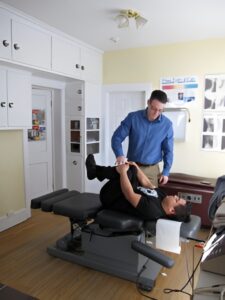
Cervical Traction and Decompression
Gentle traction can help create more space in the neck and reduce pressure on the nerve roots. This is often especially helpful for disc-related radiculopathy.
Postural Correction
Forward head posture increases mechanical stress on the neck and the nerve roots exiting it. Addressing posture, both in the office and at home, supports lasting improvement.
Soft Tissue Work
The muscles around the neck often tighten protectively when a nerve is irritated, which adds to discomfort and limits motion. Targeted soft tissue therapy eases this muscle guarding and supports the rest of your care.
Activity and Ergonomic Guidance
Sleeping position, workstation setup, and daily movement habits all affect how quickly the nerve root settles down. I’ll work with you on practical changes that support recovery, like avoiding positions that compress the neck and modifying activities that aggravate symptoms.
When Imaging Is Needed
Most cases of cervical radiculopathy can be evaluated clinically without imaging. However, an MRI may be appropriate when:
- Symptoms are progressive or severe
- There’s significant arm weakness
- Symptoms aren’t improving with conservative care
- The clinical picture suggests something other than typical cervical radiculopathy
If imaging is warranted, I’ll discuss it with you and coordinate the next steps.
When Surgery or Urgent Care Is Needed
Most cervical radiculopathy patients never need surgery. However, a surgical evaluation is appropriate when:
- There’s progressive arm weakness or muscle wasting
- Severe pain isn’t responding to conservative care over weeks to months
- Imaging shows significant nerve compression that matches your symptoms
- There are signs of spinal cord involvement, not just nerve root irritation
Spinal cord signs include clumsy hands, trouble with buttons or handwriting, balance problems or an unsteady walk, symptoms in both arms or both legs, and changes in bladder or bowel control. These need prompt evaluation by a spine specialist. Get emergency care for sudden severe weakness, neck pain after a significant injury with numbness or weakness, or neck pain with fever.
If your situation calls for a surgical evaluation, I’ll refer you to an appropriate specialist and always be straightforward about what’s realistic to accomplish conservatively.
Recovery Timeline and What to Expect
Many patients notice meaningful improvement within two to four weeks of starting comprehensive conservative care, and many cases improve substantially over 6 to 12 weeks. Long-standing or severe cases take longer, but improvement is usually still possible.
Two factors most influence outcomes: how soon treatment starts after symptoms begin, and how consistent you are with the at-home work and ergonomic changes that support in-office care. For more on day-to-day neck care, see my post on neck pain relief in Freehold.
Frequently Asked Questions
Is cervical radiculopathy the same as a pinched nerve?
The terms are often used interchangeably. “Pinched nerve” is the common term for nerve compression or irritation, while “cervical radiculopathy” is the medical term when the affected nerve is in the neck.
Should I be worried about permanent nerve damage?
Most cervical radiculopathy resolves without lasting nerve damage, especially with early care. Prolonged severe compression can occasionally cause lasting changes, which is why progressive symptoms deserve prompt evaluation.
Is it safe to have my neck adjusted with radiculopathy?
For most people, yes, with gentle techniques adapted to the nerve irritation. If there are any signs of spinal cord involvement, we avoid manipulation and refer you for further evaluation.
Get an Accurate Diagnosis and an Effective Treatment Plan
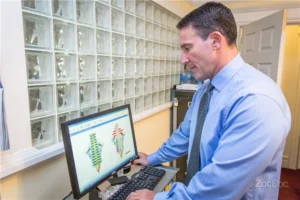
If neck pain that spreads into your arm or hand is affecting your daily life, the right diagnosis and a comprehensive treatment plan can make a significant difference. Call Freehold Chiropractic at (732) 780-0044 or book your evaluation online. New patients can take advantage of our $49 comprehensive exam, including a full orthopedic and chiropractic evaluation and a Myovision spinal stress scan.
Dr. Russell Brokstein is a lifelong Freehold resident and a seasoned chiropractor dedicated to helping patients achieve optimal health through holistic, drug-free care. With a Biology degree from Penn State and a Doctor of Chiropractic from Life Chiropractic College West, Dr. Brokstein’s passion for chiropractic began when his own recurring bronchial issues and a sports-related back injury were resolved through chiropractic adjustments. This transformative experience inspired him to focus on full-body treatments, therapeutic stretching, nutritional counseling, and stress reduction therapies to help others recover faster and perform better. Recognized as one of America’s Best Chiropractors, he leads Freehold Chiropractic with a patient-centered approach that emphasizes thorough evaluations, minimal wait times, and personalized care for athletes and families in Freehold, NJ.