
Neck pain is one of the most common complaints I see at our Freehold practice, and it’s also one of the most misunderstood. Most people reach for a heating pad or a handful of ibuprofen and wait it out, but if the underlying cause isn’t addressed, the pain keeps coming back. At Freehold Chiropractic, we focus on identifying exactly why your neck hurts, then correcting it so you can get back to your life without constantly managing symptoms.
Why Neck Pain Is So Common Right Now
We live in a world that’s hard on necks. Most people spend hours each day looking down at phones, hunching over laptops, or sitting in chairs that don’t support good posture, and over time those habits add up.
The cervical spine, the part of your spine running through your neck, supports the weight of your head. Your head weighs about 10 to 12 pounds in a neutral position. As it drifts forward and down, the load on your neck rises sharply, and one widely cited biomechanical model estimates it can reach 40 to 60 pounds of force at steeper angles, like looking down at a phone.
That’s a lot of strain to sustain all day, every day. It’s no wonder so many people here in Freehold are dealing with neck stiffness, soreness, and pain that just won’t quit.
Common Causes of Neck Pain We See at Our Practice
In my 27 years treating neck pain patients, I’ve found that most cases fall into a handful of categories. Understanding which one applies to you is the key to getting real relief.
Forward Head Posture and Tech Neck
This is probably the most common culprit I see right now. Forward head posture, sometimes called “tech neck,” develops gradually as you spend more time looking at screens. The muscles in the back of your neck become chronically overworked, while the deep muscles in the front weaken.
Left unaddressed, this postural pattern may contribute to disc wear, nerve irritation, and stiffness in the cervical spine over time.
Cervical Spine Misalignment
The seven vertebrae in your neck can shift out of their optimal alignment due to poor posture, repetitive strain, or an acute injury. When they do, nearby nerves and soft tissues get irritated, which you may feel as neck pain, stiffness, or tension that spreads into your shoulders and upper back.
Chiropractic adjustments are designed to restore better alignment and motion to these joints, which can ease nerve irritation and take pressure off the surrounding tissues.
Whiplash and Auto Accident Injuries
If you’ve been in a car accident, even a minor fender-bender, your neck may have absorbed more trauma than it looks like on the outside. Whiplash forces the neck through a rapid, violent motion that can strain muscles, sprain ligaments, and disrupt joint alignment. Symptoms often don’t appear until hours or even days after the accident, and they can show up far from the neck, as I explain in my post on whiplash and referred pain.
We see many auto accident patients at our Freehold office. Getting evaluated early after a collision can make a meaningful difference in recovery.
Muscle Tension and Stress
Emotional and physical stress both tend to settle in the neck and shoulders. When you’re stressed, you tense up, hunch your shoulders, and clench your jaw, all of which tightens the muscles supporting your neck. Over time, chronic tension can lead to painful trigger points, reduced range of motion, and headaches that start in the neck.
Cervical Disc Issues
The discs between your neck vertebrae can herniate or bulge, putting pressure on nearby nerves. When that happens, pain, numbness, or tingling can travel into your shoulder, arm, or hand. This is called cervical radiculopathy, and it often responds well to chiropractic care when caught before it becomes severe.
The Connection Between Neck Pain and Headaches
Something many patients don’t realize: many headaches actually start in the neck. Cervicogenic headaches are caused by problems in the cervical spine, and the pain often begins at the base of the skull and travels up over the head or behind the eyes.
If you have both neck pain and frequent headaches or migraines, there’s a good chance they’re connected. Addressing the neck can reduce those headaches as well, which genuinely surprises many patients.
How Chiropractic Care Relieves Neck Pain
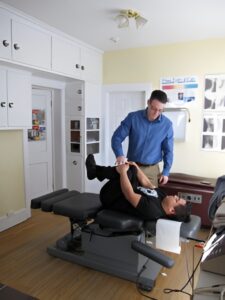
At our practice, neck pain treatment isn’t about cracking your neck and sending you on your way. I do a thorough evaluation first, looking at your posture, range of motion, muscle tone, and the alignment of your neck. I also use our Myovision spinal stress scan to get objective data about how your nervous system is responding to spinal stress.
From there, I develop a personalized treatment plan that may include:
Cervical Chiropractic Adjustments
Gentle, precise adjustments to the neck help restore alignment, ease nerve irritation, and improve joint mobility. Many patients notice less stiffness and better range of motion within a few visits. I use both manual and instrument-assisted techniques, so we can tailor the approach to what’s most comfortable and effective for you.
Our chiropractic adjustments aren’t just for the spine, either. Sometimes neck pain is connected to the upper back, shoulders, or even the jaw, and a full-body approach is often what separates temporary relief from lasting results.
Postural Correction Guidance
If forward head posture is contributing to your neck pain, adjustments alone won’t solve the problem unless we also address the habits driving it. I’ll work with you on workstation setup, sleeping positions, and targeted exercises to strengthen the muscles that support a healthy neck. You can start with the simple routine in my post on recommended neck exercises.
Soft Tissue Therapy
Tight, knotted muscles around the neck and upper back respond well to targeted soft tissue work. Reducing muscle tension helps adjustments hold longer and supports a faster recovery overall.
When to See a Chiropractor for Neck Pain
Some neck pain resolves on its own with rest, especially after an awkward sleeping position or a minor strain. But these signs suggest you should get it evaluated sooner rather than later:
- Pain that lasts more than a week or two without improving
- Stiffness severe enough to limit your range of motion
- Pain, numbness, or tingling spreading into your shoulder, arm, or hand
- Neck pain with frequent headaches
- Pain after a car accident or other trauma
- Neck pain that keeps waking you up at night
The longer neck problems go unaddressed, the more the surrounding muscles, ligaments, and discs adapt. Early care tends to bring faster, more complete results.
When to Get Medical Care Right Away
Go to the emergency room for neck pain after a serious fall or accident with numbness or weakness, a sudden severe headache unlike any before, trouble speaking, vision changes, or facial drooping. See a doctor promptly for neck pain with fever and a stiff neck, worsening arm weakness, hand clumsiness, or balance problems.
What Makes Our Approach Different
One thing that sets Freehold Chiropractic apart is the time we spend with each patient. I’ve always believed that understanding your full health picture, not just the spot that hurts, is essential to getting real results, and a rushed five-minute appointment doesn’t allow that.
During your visit, we’ll talk through your symptoms, your daily habits, your history, and your goals. Then I’ll do a thorough hands-on evaluation before we discuss treatment options. No pressure and no assembly-line care, just honest, individualized attention.
I’ve been treating neck pain patients here in Freehold for over 27 years and have performed more than 185,000 adjustments in that time. Whether your neck pain is new or something you’ve managed for years, there’s a good chance we can help.
Frequently Asked Questions About Neck Pain Treatment
Is chiropractic care safe for neck pain?
Yes, for the vast majority of patients, and serious complications are rare. I take a thorough health history and exam before any treatment, and I’ll refer you elsewhere if another type of care is a better fit.
How many visits will I need?
It depends on how long you’ve had the pain and what’s causing it. Many patients with recent neck pain feel significant relief within four to six visits, while long-standing problems usually need a longer plan.
Will my neck pain come back after treatment?
Many patients have long-term relief when the cause is addressed and they adjust the habits that contributed. Some choose periodic maintenance visits to stay ahead of recurrence.
Ready to Get Rid of Your Neck Pain?
If neck pain is affecting your daily life, don’t wait it out hoping it goes away. Call Freehold Chiropractic at (732) 780-0044 or schedule your consultation online. New patients can take advantage of our $49 initial exam, which includes a full orthopedic and chiropractic evaluation, a Myovision spinal stress scan, and your first adjustment.
Dr. Russell Brokstein is a lifelong Freehold resident and a seasoned chiropractor dedicated to helping patients achieve optimal health through holistic, drug-free care. With a Biology degree from Penn State and a Doctor of Chiropractic from Life Chiropractic College West, Dr. Brokstein’s passion for chiropractic began when his own recurring bronchial issues and a sports-related back injury were resolved through chiropractic adjustments. This transformative experience inspired him to focus on full-body treatments, therapeutic stretching, nutritional counseling, and stress reduction therapies to help others recover faster and perform better. Recognized as one of America’s Best Chiropractors, he leads Freehold Chiropractic with a patient-centered approach that emphasizes thorough evaluations, minimal wait times, and personalized care for athletes and families in Freehold, NJ.