Whiplash can cause pain far from the neck, in the head, shoulders, arms, or jaw, because injured neck tissues send pain signals that make the nervous system more sensitive and spread pain to nearby areas. Research shows people with whiplash often feel pain more easily and over a wider area than people without it, and that this heightened sensitivity is linked to longer-lasting symptoms. That’s one reason I recommend getting evaluated after any car accident or fall, even if you feel fine at first.
What Whiplash Is
Many people experience whiplash injuries after an auto accident or other trauma, when the head and neck are thrown through a sudden, abnormal motion that pushes them beyond their normal range. The muscles, tendons, and ligaments of the neck can be strained or sprained in the process.
Car accidents are a common cause, but whiplash can also happen in sports and accidental falls. You may also hear it called an acceleration flexion-extension neck injury or a soft tissue cervical hyperextension injury. Many doctors simply describe it as a cervical sprain or strain.
Common Whiplash Symptoms

Neck pain and headaches are two of the most common symptoms after a whiplash injury. Whiplash can also cause:
- Arm pain, numbness, or tingling
- Shoulder pain and upper back pain
- Dizziness or nausea
- Jaw pain or TMJ problems
- Trouble concentrating or sleeping
One of the tricky parts of whiplash is that symptoms don’t always show up right away. They often appear hours or days after the injury, and some people notice lingering problems weeks or months later. That’s an important reason to get evaluated after any trauma, even if you feel okay at the scene.
What Referred Pain Means
Referred pain starts in one area but is felt in another. After a whiplash injury, pain signals from the injured neck tissues can activate other nerves in the spinal cord and brain. Those nerves then cause the brain to perceive pain in other areas they serve, such as the shoulder, arm, or head.
That’s why someone with a neck injury may complain mostly about headaches or shoulder pain, even though the neck is where the problem started.
What the Research Shows
A 2008 study published in the European Journal of Pain looked at referred pain in people with whiplash and people without pain. Twelve participants had whiplash-associated disorder, and twelve were pain-free. Researchers used small, controlled electrical stimulation in the shoulder and upper arm muscles to produce referred pain and compared how the two groups responded.
The differences were striking:
- Sensitivity: the pain-free group needed about three times as much stimulation to reach the same pain levels as the whiplash group.
- Area: people with whiplash felt referred pain over a much wider area than the pain-free group.
- Direction: in the pain-free group, referred pain spread away from the body, toward the hand. In the whiplash group, it also spread toward the center of the body.
This research helps explain the whiplash injury. Other studies have shown that the central nervous system can become sensitized and overreactive after a neck injury. Research on people with acute whiplash has also found that heightened pain sensitivity early on is linked to a greater chance of longer-lasting pain and symptoms.
Why Early Evaluation Matters
As a chiropractor in Freehold, NJ, I’ve treated whiplash patients for over 27 years. These findings are one reason I believe early evaluation and care after an auto accident or other trauma are so important. Addressing the injury before the nervous system becomes more sensitized gives you the best chance at a full recovery.
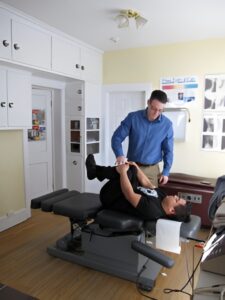
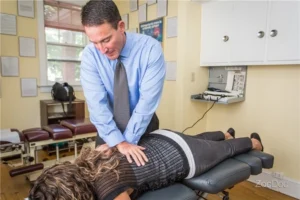
At Freehold Chiropractic, we use state-of-the-art computerized technology to help examine the spine, nerves, and surrounding muscles. It shows how severe the underlying problem is and whether it’s acute or chronic, which guides your care.
From there, treatment focuses on restoring normal neck motion with gentle chiropractic adjustments, easing muscle tension with therapeutic stretching, and rebuilding strength so your neck can handle daily life again. The earlier we start, the better your chances of getting back to a normal, active lifestyle without drugs or surgery.
When to Get Emergency Care First
Some symptoms after an accident need emergency care before any chiropractic treatment. Go to the emergency room right away if you have a severe or worsening headache, confusion, vomiting, or loss of consciousness, severe neck pain, new numbness or weakness in your arms or legs, trouble walking, or chest or abdominal pain.
Frequently Asked Questions
How long after an accident can whiplash symptoms appear?
Many people notice symptoms within hours to a few days, but some develop or become clearer over the following weeks.
Why do I have headaches and arm pain if I hurt my neck?
Injured neck tissues can refer pain to the head, shoulders, and arms, and the nervous system can become more sensitive after an injury, spreading pain to nearby areas.
Should I see a chiropractor if I feel fine after an accident?
An evaluation is still a good idea, since whiplash symptoms are often delayed. Getting checked early also documents your condition from the start.
Get Checked After an Accident
If you’ve been in a car accident or had a fall and you’re dealing with neck pain, headaches, or pain spreading into your shoulders or arms, don’t wait for it to become a long-term problem. Call Freehold Chiropractic at (732) 780-0044 or contact us online to schedule an evaluation.
References
- Kosek E, Januszewska A. Mechanisms of pain referral in patients with whiplash-associated disorder. European Journal of Pain 2008;12:650-660.
- Walton DM, Macdermid JC, Nielson W, Teasell RW, Reese H, Levesque L. Pressure pain threshold testing demonstrates predictive ability in people with acute whiplash. Journal of Orthopaedic & Sports Physical Therapy 2011;41(9):658-65.
Dr. Russell Brokstein is a lifelong Freehold resident and a seasoned chiropractor dedicated to helping patients achieve optimal health through holistic, drug-free care. With a Biology degree from Penn State and a Doctor of Chiropractic from Life Chiropractic College West, Dr. Brokstein’s passion for chiropractic began when his own recurring bronchial issues and a sports-related back injury were resolved through chiropractic adjustments. This transformative experience inspired him to focus on full-body treatments, therapeutic stretching, nutritional counseling, and stress reduction therapies to help others recover faster and perform better. Recognized as one of America’s Best Chiropractors, he leads Freehold Chiropractic with a patient-centered approach that emphasizes thorough evaluations, minimal wait times, and personalized care for athletes and families in Freehold, NJ.