
Pain that starts in your neck and radiates down your arm, sometimes with tingling, numbness, or weakness in your hand, is one of the most concerning symptoms patients bring to our Freehold practice. The condition is called cervical radiculopathy, and it happens when a nerve root in the neck is compressed or irritated. The good news is that the vast majority of cases respond well to conservative chiropractic care without requiring surgery, especially when treatment starts early.
What Is Cervical Radiculopathy?
Your cervical spine, the section of your spine running through the neck, has seven vertebrae. Between each pair of vertebrae, nerve roots exit and travel out to supply sensation and motor function to specific parts of the shoulder, arm, and hand.
When one of these nerve roots becomes compressed or irritated, the symptoms travel along the path that nerve supplies. The result is pain, numbness, tingling, or weakness somewhere in the shoulder, arm, or hand, depending on which nerve root is involved.
Different nerve roots produce different symptom patterns. For example, C6 radiculopathy often causes symptoms into the thumb and index finger, while C7 radiculopathy tends to involve the middle finger. Identifying which nerve is affected helps target treatment precisely.
Common Symptoms of Cervical Radiculopathy
- Sharp or burning pain radiating from the neck into the shoulder, arm, or hand
- Numbness or tingling in specific fingers or parts of the hand
- Weakness in arm or hand muscles
- Pain that worsens with certain neck positions or movements
- Difficulty gripping or holding objects
- Neck pain accompanying the arm symptoms (though sometimes the neck itself doesn’t hurt at all)
Many patients describe the arm pain as more bothersome than the neck pain itself, and some don’t have neck pain at all, just the arm symptoms. That’s why this condition is sometimes misdiagnosed as a shoulder problem or carpal tunnel syndrome.
What Causes Cervical Radiculopathy
Cervical Disc Herniation
The most common cause in younger and middle-aged patients. When a disc in the neck herniates or bulges, it can press directly on a nerve root, causing the radiating symptoms. Coughing, sneezing, or certain head positions often worsen the symptoms because they increase pressure in the affected area.
Cervical Foraminal Stenosis
The neuroforamen is the opening where the nerve root exits the spine. Age-related changes, including bone spurs and disc height loss, can narrow this opening and compress the nerve. This is more common in patients over 50.
Cervical Spine Misalignment
Misaligned vertebrae can create both mechanical pressure on nerve roots and the inflammatory environment that irritates them. Correcting these misalignments is one of the most effective ways to reduce nerve irritation.
Repetitive Strain and Poor Posture
Forward head posture and chronic neck strain create cumulative stress on cervical structures over time, contributing to the disc and joint changes that eventually compress nerve roots.
Acute Injury
Whiplash from auto accidents and other neck injuries can produce cervical radiculopathy, sometimes immediately and sometimes with symptoms developing over days or weeks after the injury.
How Cervical Radiculopathy Differs From Other Arm Pain Conditions
Several conditions can cause arm symptoms that overlap with cervical radiculopathy, which is why a thorough evaluation matters.
Carpal tunnel syndrome involves compression of the median nerve at the wrist. Symptoms are typically isolated to the hand and don’t usually start at the neck.
Ulnar nerve entrapment, also called cubital tunnel syndrome, involves compression of the ulnar nerve at the elbow and produces symptoms in the pinky and ring fingers.
Thoracic outlet syndrome involves compression of nerves and blood vessels as they pass through the shoulder area.
Shoulder impingement and rotator cuff issues can produce pain that radiates into the arm, but the pattern and triggers are usually different from true nerve root symptoms.
Sometimes more than one of these conditions is present simultaneously, which is why proper diagnosis matters. Treating the wrong condition or missing one of multiple contributors leaves patients frustrated by limited results.
How We Treat Cervical Radiculopathy at Our Freehold Practice
Most cases of cervical radiculopathy respond well to conservative care. At Freehold Chiropractic, our approach combines several elements to reduce nerve compression and irritation:
Cervical Spine Adjustments
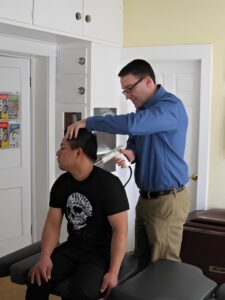
Targeted, gentle adjustments to the cervical vertebrae restore proper alignment and joint mobility, which reduces mechanical pressure on the nerve root. The techniques used for radiculopathy are typically gentler than standard cervical adjustments, often using instrument-assisted methods to deliver precise corrections without aggressive manipulation.
Our chiropractic adjustments are tailored to your specific situation. For patients with significant nerve symptoms, we proceed cautiously and adjust the approach based on how you’re responding.
Cervical Traction and Decompression
Gentle traction techniques can help create more space in the cervical spine, reducing pressure on the nerve roots. This is often particularly helpful for patients with disc-related radiculopathy.
Postural Correction
Forward head posture significantly increases mechanical stress on the cervical spine and the nerve roots that exit from it. Addressing posture, both through in-office work and at-home corrections, supports lasting improvement.
Soft Tissue Work
The muscles around the cervical spine often go into protective spasm when there’s nerve irritation, which adds to the discomfort and limits motion. Targeted soft tissue therapy reduces this muscle guarding and supports the structural work we’re doing.
Activity and Ergonomic Guidance
Sleeping position, workstation setup, and daily movement habits all affect how quickly the nerve root settles down. I’ll work with you on practical changes that support recovery, like avoiding positions that compress the neck and modifying activities that aggravate symptoms.
When Imaging Is Needed
Most cases of cervical radiculopathy can be evaluated clinically without imaging. However, MRI may be appropriate when:
- Symptoms are progressive or severe
- There’s significant arm weakness
- Symptoms aren’t improving with conservative care
- The clinical picture suggests something other than a typical cervical radiculopathy
If imaging is warranted, I’ll discuss that with you and coordinate the appropriate next steps.
When Surgery Might Be Necessary
Most cervical radiculopathy patients never need surgery. However, surgical evaluation is appropriate when:
- There’s progressive arm weakness or muscle wasting
- Severe pain isn’t responding to conservative care over weeks to months
- Imaging shows significant nerve compression with corresponding clinical symptoms
- There are signs of spinal cord involvement, not just nerve root
If your situation warrants surgical evaluation, I’ll refer you to an appropriate specialist. I’ll always be straightforward about what I think is realistic to accomplish conservatively.
Recovery Timeline and What to Expect
Many patients with cervical radiculopathy notice meaningful improvement within 2-4 weeks of starting comprehensive conservative care, with most cases resolving substantially over 6-12 weeks. Long-standing or severe cases take longer, but improvement is usually achievable even in those situations.
Two factors most influence outcomes: how early treatment starts after symptoms began, and how consistent the patient is with the at-home work and ergonomic changes that support the in-office care.
Frequently Asked Questions
Is cervical radiculopathy the same as a pinched nerve?
The terms are often used interchangeably. “Pinched nerve” is the common term for nerve compression or irritation, while “cervical radiculopathy” is the more specific medical term when the affected nerve is in the neck.
Should I be worried about permanent nerve damage?
Most cervical radiculopathy resolves without lasting nerve damage, especially when treatment starts early. Prolonged severe compression can occasionally lead to lasting changes, which is why early intervention matters and why progressive symptoms warrant prompt evaluation.
Get an Accurate Diagnosis and an Effective Treatment Plan
If neck pain that radiates into your arm or hand is affecting your daily life, the right diagnosis and a comprehensive treatment plan can make a significant difference. Call Freehold Chiropractic at (732) 780-0044 or book your evaluation online. New patients can take advantage of our $49 comprehensive exam, including a full orthopedic and chiropractic evaluation and Myovision spinal stress scan.