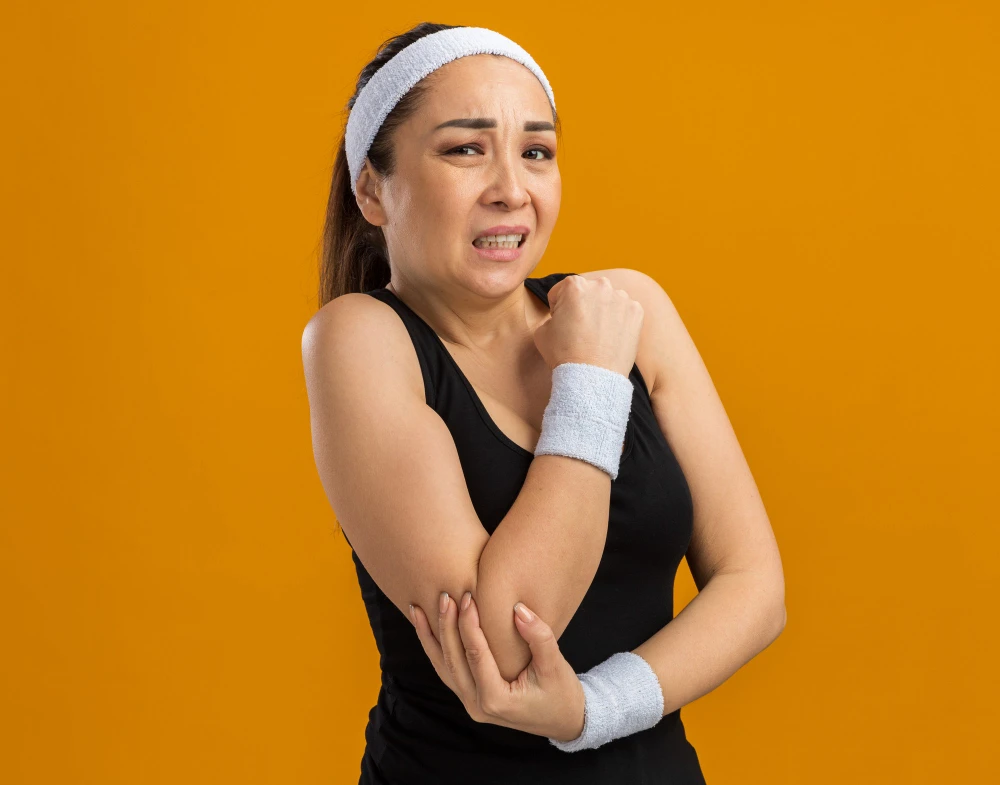
Tennis elbow is irritation and breakdown of the tendons that connect your forearm muscles to the outside of your elbow, causing pain that worsens when you grip, lift, or twist your wrist. At Freehold Chiropractic in Freehold, we treat tennis elbow with elbow and wrist adjustments, soft tissue therapy, and corrective exercises that address the cause rather than only easing symptoms. Many patients notice significant relief within four to six weeks, often without injections or long-term bracing.
What Tennis Elbow Really Is
Despite the name, you don’t have to play tennis to develop tennis elbow. In fact, most people who get it don’t play tennis at all. The medical term is lateral epicondylitis, often now called lateral elbow tendinopathy.
The tendons on the outside of your elbow attach your forearm extensor muscles to the bone. These muscles straighten your wrist and fingers and help rotate your forearm.
Repetitive gripping, twisting, or lifting creates tiny tears in these tendons. Over time, the damage builds faster than your body can repair it, and the tendon becomes irritated and weakened.
The result is pain on the outside of your elbow that can spread down your forearm. Gripping objects, shaking hands, turning doorknobs, or lifting anything becomes painful.
Common Causes of Tennis Elbow
Repetitive Computer Work
Hours of typing and mouse use strain your forearm muscles, and poor ergonomics make it worse. Many office workers in Freehold develop tennis elbow from desk work, not sports. Learn more about desk job injuries.
Manual Labor
Carpenters, plumbers, painters, and mechanics grip tools and twist their wrists over and over, and these jobs have high tennis elbow rates.
Racquet Sports
Tennis, squash, and racquetball players can develop tennis elbow from technique or equipment problems. A poor backhand is a common culprit.
Age-Related Changes
Tennis elbow is most common between ages 30 and 50. Tendons lose some elasticity with age, making them more vulnerable to overuse.
Poor Technique
Whether you’re typing, using tools, or playing sports, poor technique puts extra stress on the elbow tendons.
Inadequate Rest and Recovery
Continuing aggravating activities without giving tendons time to recover keeps the injury cycle going.
Why Your Elbow Pain Might Involve Your Neck
Some tennis elbow cases have a neck component that gets overlooked. Nerve roots in the neck supply the forearm muscles.
When those nerve roots are irritated by disc problems or joint restrictions, the muscles they control may not work as well. Weak or poorly coordinated muscles change your mechanics and can add stress to the elbow tendons.
That’s one reason some tennis elbow cases don’t respond to elbow treatment alone. I always check the neck when treating tennis elbow, since addressing both areas can lead to better results.
How We Diagnose Tennis Elbow
An accurate diagnosis makes sure we’re treating the right condition, since several problems can cause pain on the outside of the elbow.
We use specific tests, like Cozen’s test and Mill’s test, that reproduce tennis elbow pain. We check your grip strength and forearm muscle function, and we evaluate your neck for nerve involvement.
We also look at your wrist and shoulder mechanics, since problems there can add stress to the elbow, and we talk through your work and hobbies to find the repetitive movements involved.
In some cases, we may recommend imaging to rule out other conditions like arthritis or bone spurs.
Chiropractic Treatment for Tennis Elbow
Our approach addresses all the factors contributing to your tennis elbow, not just the painful tendon.
Elbow Joint Adjustments
Gentle adjustments help restore normal motion to your elbow joint, which can ease stress on the outer elbow. We also adjust the wrist and forearm when needed, since good motion throughout the arm reduces strain on the elbow tendons.
Cervical Spine Care
When the neck is involved, we address joint restrictions there to support normal nerve function to your forearm muscles.
Soft Tissue Therapy
We work directly on the irritated tendons and tight forearm muscles. These techniques help break up scar tissue and improve blood flow, and releasing tension in the forearm muscles reduces the pull on the injured tendons so they can recover.
Graston Technique
This instrument-assisted soft tissue technique is often used for tennis elbow. It’s designed to break down scar tissue and stimulate the healing response in the tendon.
Therapeutic Exercises
We teach you specific exercises that strengthen your forearm in the right way. Eccentric exercises, where you slowly lower a weight, have good research support for tendon problems like tennis elbow. We also provide stretches to keep your forearm flexible and help prevent re-injury.
Ergonomic Modifications
We identify the daily activities stressing your elbow and show you how to modify them while your tendons heal. Small changes in how you work, type, or play can make a big difference.
Why Cortisone Injections Aren’t Usually the Best First Step
Many doctors recommend cortisone injections for tennis elbow. Injections can provide quick, short-term relief, but they have real downsides.
Repeated cortisone injections can weaken tendons, and they don’t address the mechanics behind tennis elbow. Research has found that people who receive cortisone injections often feel better at first but have higher rates of pain returning over the following year compared with those treated conservatively.
That’s why I recommend trying care that addresses the cause and supports healing first.
Tennis Elbow Braces and Straps
Counterforce braces worn just below the elbow can provide temporary relief by changing where stress concentrates on your tendons.
These braces can help during healing, but they’re a support, not a cure. Long-term brace dependence isn’t the goal, so we use them as a tool while we address the underlying problem.
Recovery Timeline for Tennis Elbow
Recovery varies based on severity and how long you’ve had symptoms.
Weeks 1 to 2: Initial Phase
We focus on calming pain and irritation and teach you activity changes to protect the healing tendon. Some improvement often happens in the first week.
Weeks 3 to 4: Progressive Improvement
Pain eases in intensity and frequency, and grip strength begins improving. We progress your exercises as you can tolerate them.
Weeks 5 to 8: Restoration Phase
Many patients return to normal activities during this period. We continue strengthening and address any remaining mechanical issues.
Weeks 9 to 12: Maintenance
By this point, many tennis elbow cases have resolved. We focus on preventing recurrence through good technique and ongoing exercises.
Long-standing cases may take longer. Tennis elbow can be stubborn, sometimes lasting several months, which is why consistent care and exercise matter.
Preventing Tennis Elbow from Returning
Once your tennis elbow heals, keeping it away means paying attention to the activities that caused it.
Maintain good ergonomics during computer work and manual tasks, take frequent breaks from repetitive gripping or twisting, and keep your forearm muscles flexible with regular stretching.
Strengthen your forearm and grip regularly, use good technique at work and in sports, and warm up before activities that stress your elbows. Address minor elbow discomfort early, before it becomes full-blown tennis elbow.
Tennis Elbow in Athletes
Tennis players and other racquet sport athletes need sport-specific care for tennis elbow.
We evaluate your technique to find mechanical flaws adding stress to your elbow, with poor backhand form being the most common. We also look at your equipment, since grip size, string tension, and racquet weight all matter. Our sports performance care helps athletes return to competition safely.
We also work on strengthening your entire chain of movement, since problems in your legs, core, or shoulder can force your elbow to compensate.
Office Workers and Tennis Elbow
Hours of typing and mouse use create the perfect conditions for this overuse injury. Common problems include a mouse placed too far away, a keyboard that’s too high or too low, a wrist rest that forces your wrist to bend back, and poor chair height.
We evaluate your workspace and suggest specific changes. A vertical or ergonomic mouse can reduce forearm strain, keyboard positioning that keeps your wrists neutral helps, and regular breaks give your tendons time to recover.
When Tennis Elbow Needs Medical Attention
The vast majority of tennis elbow cases improve with conservative care. Surgery is usually considered only after 6 to 12 months of consistent conservative treatment without improvement, and if that’s the case, I’ll refer you to a qualified orthopedic surgeon or sports medicine specialist.
See a doctor promptly if your elbow is red, hot, and swollen, especially with a fever, if pain started with a fall or injury and the elbow looks deformed, or if you have numbness in your ring and little fingers. That last symptom can point to a nerve problem, which I cover in my post on ulnar nerve entrapment.
Golfer’s Elbow vs Tennis Elbow
Golfer’s elbow is tennis elbow’s cousin. It affects the inside of your elbow rather than the outside, involving the wrist flexor muscles instead of the extensors.
Our treatment approach for both is similar, adjusted for the specific anatomy involved, and some people develop both at the same time.
Real Results from Freehold Patients
Over my 27 years treating patients in Freehold, I’ve helped many people overcome tennis elbow. Office workers get back to pain-free typing, tradespeople return to work without constant elbow pain, and tennis players return to the court with better technique.
The key is addressing all the contributing factors rather than only treating the painful spot. When we improve your mechanics, strengthen weak areas, and fine-tune your ergonomics, tennis elbow has the best chance to heal.
Frequently Asked Questions
How long does tennis elbow take to heal?
Many cases improve significantly within four to six weeks of starting treatment, with full recovery often taking 8 to 12 weeks. Long-standing cases can take longer.
Can I continue working with tennis elbow?
Usually, yes, with modifications. Complete rest is rarely needed and can slow recovery by letting your muscles weaken.
Will tennis elbow come back after treatment?
It can if you return to the same habits without changes. Good ergonomics, regular breaks, and ongoing forearm exercises help prevent it from returning.
Should I ice or heat my tennis elbow?
Ice usually works better for a recent flare-up, while heat often feels better for ongoing stiffness. We’ll guide you on which to use for your situation.
Get Relief from Tennis Elbow Pain
If elbow pain is interfering with your work, sports, or daily activities, let’s find out what’s causing it and address it at its source. Call our Freehold office at (732) 780-0044 or schedule your consultation online. We’ll perform a thorough evaluation and create a plan to get you back to pain-free function.
Dr. Russell Brokstein is a lifelong Freehold resident and a seasoned chiropractor dedicated to helping patients achieve optimal health through holistic, drug-free care. With a Biology degree from Penn State and a Doctor of Chiropractic from Life Chiropractic College West, Dr. Brokstein’s passion for chiropractic began when his own recurring bronchial issues and a sports-related back injury were resolved through chiropractic adjustments. This transformative experience inspired him to focus on full-body treatments, therapeutic stretching, nutritional counseling, and stress reduction therapies to help others recover faster and perform better. Recognized as one of America’s Best Chiropractors, he leads Freehold Chiropractic with a patient-centered approach that emphasizes thorough evaluations, minimal wait times, and personalized care for athletes and families in Freehold, NJ.