If the first steps out of bed in the morning feel like walking on broken glass, you’re probably dealing with plantar fasciitis. It’s one of the most common causes of heel pain we see at Freehold Chiropractic, and it’s also one of the most treatable once we identify what’s driving it. The good news: most patients get significant relief without injections or surgery when the underlying mechanical problems are properly addressed.
What Is Plantar Fasciitis?
The plantar fascia is a thick band of connective tissue running along the bottom of your foot, connecting your heel bone to your toes. It acts as a natural shock absorber and supports your arch every time you take a step.
Plantar fasciitis happens when that tissue becomes irritated and starts to break down, usually from repetitive stress, poor foot mechanics, or strain that exceeds the tissue’s ability to recover. The pain is typically a sharp, stabbing feeling at the bottom of the heel. It’s often worst with the first steps in the morning or after rest, and tends to ease a bit once you get moving.
Left untreated, plantar fasciitis can become a long-term problem. Some patients deal with it for years without lasting relief because the root cause is never addressed.
Why Plantar Fasciitis Keeps Coming Back
The most common mistake I see with plantar fasciitis is treating only the local symptom. Stretching, ice, and anti-inflammatory medication can ease pain for a while, but if the underlying mechanics haven’t changed, the problem tends to come back.
Plantar fasciitis often has a mechanical root cause. The most common ones we find at our Freehold practice include:
Flat Feet and Overpronation
When the arch collapses and the foot rolls inward too much, the plantar fascia gets stretched beyond its ideal range with every step. Over thousands of steps a day, that repeated overstretching creates tiny tears and irritation in the tissue. Supporting the foot properly is often one of the most helpful things we can do for chronic plantar fasciitis.
High Arches
High arches create the opposite problem. Instead of absorbing and spreading shock, a rigid high arch sends more impact directly into the heel and plantar fascia. People with high arches are also prone to plantar fasciitis, especially when they increase their activity level.
Tight Calves and Achilles Tendon
The calf muscles connect through the Achilles tendon to the heel, right next to where the plantar fascia attaches. When the calves are chronically tight, they increase tension at the heel and pull on the plantar fascia with every step. That’s why calf stretching is recommended for plantar fasciitis, though stretching alone rarely solves the problem completely.
Poor Footwear
Shoes without proper arch support, with worn-out cushioning, or that put your foot in a poor position are a major contributor. This is especially common in people who spend long hours on hard floors, wear flat-soled shoes, or often go barefoot on hard surfaces.
Sudden Increases in Activity
Plantar fasciitis often flares when people ramp up their activity without enough preparation. New runners, people returning to exercise after a break, and workers starting jobs that keep them on their feet for long hours are all common examples.
How Chiropractic Care Treats Plantar Fasciitis
At Freehold Chiropractic, we treat plantar fasciitis as part of a connected system rather than an isolated foot problem. Here’s what that looks like.
Foot and Ankle Adjustments
The 26 bones of the foot, along with the ankle joint, need to move well and stay in good alignment for the plantar fascia to work without excessive stress. Our extremity care includes precise adjustments to the bones of the midfoot, forefoot, and ankle to restore better mechanics. Most patients with plantar fasciitis have never had this kind of care, and many notice improvement within a few visits.
Custom Orthotics
For many plantar fasciitis patients, custom orthotics are a central part of long-term management. We use 3D scanning to assess your foot mechanics and design custom Foot Levelers orthotics built for your feet.
Off-the-shelf insoles can provide some support, but they’re made for generic feet. Custom orthotics are designed around your specific pattern of overpronation, high arch, or other issue stressing your plantar fascia, and many patients notice less morning heel pain within the first few weeks of wearing them consistently.
Assessing the Full Kinetic Chain
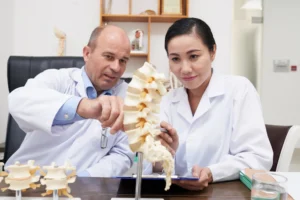
Because your feet are the foundation of your whole body, what happens there affects everything above. I also assess your ankle mobility, knee alignment, hip mechanics, and lower back to understand how your overall movement may be contributing. Addressing problems above the foot often helps the foot heal faster and stay healthier.
This connects to what I discussed in my post on why your feet might be causing your back pain. The connection runs both ways: poor foot mechanics affect the back, and the way you carry your whole body affects your feet.
Soft Tissue Work
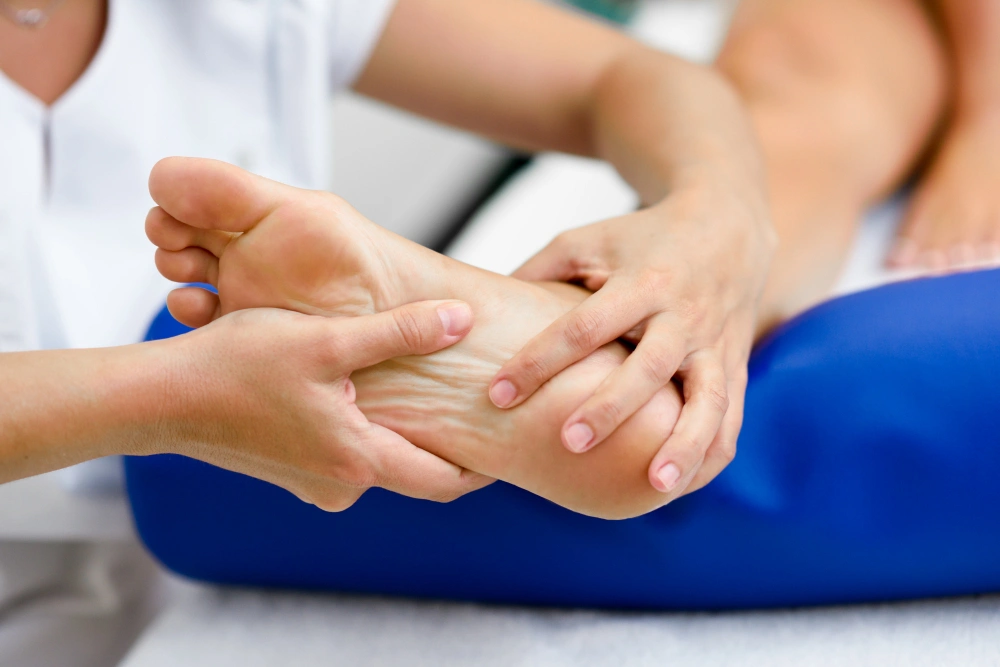
Targeted soft tissue therapy for the plantar fascia, calves, and Achilles tendon helps calm irritation, release tight tissue, and restore healthier function. It complements the adjustments and orthotics by addressing the muscle and fascia side of the problem.
Footwear Guidance
I’ll also give you practical footwear recommendations for your foot type and daily activities. Sometimes a simple change in shoes makes a meaningful difference, especially alongside the other treatments.
What You Can Do at Home
- Stretch before your first steps. Pull your toes back toward your shin for 30 seconds a few times before getting out of bed to stretch the plantar fascia.
- Stretch your calves daily, with both a straight knee and a bent knee.
- Roll your arch over a frozen water bottle or ball for a few minutes after activity.
- Avoid going barefoot on hard floors while your heel is healing.
- Build activity gradually rather than jumping back to long runs or long days on your feet.
Other Common Foot and Heel Conditions We Treat
Plantar fasciitis is the most common, but it’s far from the only foot problem we see. Other foot and heel conditions we help with include:
- Achilles tendinopathy: irritation or breakdown of the Achilles tendon, causing pain above the heel, especially with activity
- Bunion pain: discomfort from bony bumps at the base of the big toe that affect how you walk
- Metatarsalgia: pain in the ball of the foot, often from uneven load
- Ankle sprains and instability: repeated sprains are often a sign that the original injury and joint mechanics weren’t fully addressed
- Flat feet causing widespread discomfort: when flat arches are behind several pain complaints, orthotics and foot mechanics work can address the source
How Long Does Plantar Fasciitis Take to Heal?
With treatment that addresses the mechanical causes, many plantar fasciitis patients see meaningful improvement within four to eight weeks. Cases that have lasted a year or more take longer but still often respond well to a comprehensive approach.
Patients who wear their orthotics consistently, make the footwear changes we discuss, keep up their stretches, and complete their care plan tend to get better faster and stay better longer. Those who only address the pain without changing the mechanics often improve and then relapse.
When to See a Chiropractor for Heel Pain
Any of these should prompt you to get your foot evaluated sooner rather than later:
- Morning heel pain that’s lasted more than a few weeks
- Pain that limits walking, exercise, or standing for long periods
- Heel pain that’s been treated before but keeps coming back
- Foot pain along with knee, hip, or low back pain
- Difficulty finding shoes that feel comfortable
Don’t wait until the pain is unbearable. Earlier care tends to bring faster, more complete results.
When Heel Pain Needs a Doctor First
See a doctor promptly if heel pain started after a fall or jump and you can’t put weight on it, if you have burning, numbness, or tingling in your foot, if the heel is red, hot, and swollen, or if you have a fever. People with diabetes should have any new foot pain, sores, or numbness checked by their doctor.
Frequently Asked Questions
Are custom orthotics covered by insurance?
Coverage varies by plan, and some require a referral or prescription. Check with your insurance company before your visit, and our team can help you sort it out when you come in.
Can I still exercise with plantar fasciitis?
Often, yes, with some changes. High-impact activities like running may need to be scaled back for a while, but lower-impact movement is usually fine and can help recovery.
Will plantar fasciitis go away on its own?
Many cases eventually improve, but it can take many months without treatment, and it often returns if the cause isn’t addressed. Treating the mechanics usually speeds up recovery.
Do I need an X-ray for heel pain?
Not usually. Plantar fasciitis is typically diagnosed with an exam, and imaging is mainly used when an injury, stress fracture, or another problem is suspected.
Get Lasting Relief From Heel and Foot Pain
If plantar fasciitis or foot pain is affecting your daily life, Freehold Chiropractic can help. Call our Freehold office at (732) 780-0044 or request an appointment online. New patients receive a comprehensive evaluation, including a full orthopedic and chiropractic exam, a Myovision spinal stress scan, and a 3D orthotics foot scan, all for just $49.
Dr. Russell Brokstein is a lifelong Freehold resident and a seasoned chiropractor dedicated to helping patients achieve optimal health through holistic, drug-free care. With a Biology degree from Penn State and a Doctor of Chiropractic from Life Chiropractic College West, Dr. Brokstein’s passion for chiropractic began when his own recurring bronchial issues and a sports-related back injury were resolved through chiropractic adjustments. This transformative experience inspired him to focus on full-body treatments, therapeutic stretching, nutritional counseling, and stress reduction therapies to help others recover faster and perform better. Recognized as one of America’s Best Chiropractors, he leads Freehold Chiropractic with a patient-centered approach that emphasizes thorough evaluations, minimal wait times, and personalized care for athletes and families in Freehold, NJ.