Your feet are the foundation of your entire skeletal system. When that foundation is off, whether from flat arches, overpronation, or uneven weight distribution, the effects can travel up through your ankles, knees, hips, and spine. At Freehold Chiropractic, I regularly see patients whose chronic back pain finally improves once we address their foot mechanics.
The Foundation Principle
Think about what happens when a building has foundation problems. Cracks appear in the walls, doors stop closing properly, and floors become uneven. The problems show up far from the foundation, but that’s where they start.
Your body works the same way. Your feet support your entire structure with every step, and most people take thousands of steps a day. If your feet aren’t working correctly, that’s thousands of chances each day for uneven stress to travel up through your body.
I’ve practiced in Freehold for 27 years and performed over 185,000 adjustments. Early in my career, I focused mainly on the spine. Over time, I learned that lasting results often require looking at the whole chain of joints that work together, and that chain starts at the ground.
How Foot Problems Create Back Pain
The connection between your feet and lower back comes down to biomechanics, how your body moves and distributes force. Here’s what can happen when your foot mechanics are off.
The Chain Reaction
When your foot hits the ground incorrectly, your ankle compensates. Then your knee compensates for your ankle, your hip compensates for your knee, and your lower back compensates for your hip.
Each compensation might be small on its own. But multiply them by thousands of steps a day and hundreds of thousands a year, and you have a recipe for chronic pain that seems to come from nowhere.
A patient comes in saying their back hurts. There was no injury and nothing obvious triggered it. The pain just developed gradually and won’t go away. Often, part of the answer is right there at the end of their legs.
Overpronation and Low Arches
Overpronation means your foot rolls inward too much when you walk or stand, and it’s very common.
When your foot rolls inward, your lower leg rotates inward. That rotation travels up to your knee, then your hip, and can tilt your pelvis. A tilted pelvis changes the curve of your lower back and puts uneven pressure on your discs and spinal joints.
Low arches, or flat feet, can create similar problems. Without enough arch support, the foot collapses under your weight and triggers the same chain of compensations.
Leg Length Differences
Many people have a slight difference in leg length. This can be structural, where the bones are actually different lengths, or functional, where muscle imbalances or joint restrictions make one leg act shorter.
Either way, your body has to compensate. The pelvis tilts, the spine curves, and muscles on one side work harder than the other, and over time those imbalances can cause pain.
Sometimes the solution is correcting a functional leg length difference with chiropractic adjustments. Other times, a heel lift in the shoe of the shorter leg helps. And sometimes custom orthotics address both the leg length difference and the underlying foot mechanics at once.
Uneven Weight Distribution
Your feet should distribute your body weight fairly evenly. When they don’t, such as carrying more weight on one foot or more on the heel than the forefoot, compensations develop throughout your body.
This often happens so gradually that you don’t notice. But your spine, discs, and muscles do.
Symptoms That Suggest a Foot-Back Connection
Not all back pain comes from the feet. But certain patterns suggest your foundation might be involved:
- Back pain that developed gradually without an obvious cause
- Pain that worsens with long periods of standing or walking
- Symptoms that improve when you sit or lie down
- Back pain along with hip, knee, or ankle problems
- Pain that keeps returning despite treatment
- Uneven wear on your shoes, with one side worn more than the other
- A history of foot problems, plantar fasciitis, or ankle sprains
If several of these apply to you, your feet deserve a look as part of your back pain care.
Why Spinal Adjustments Alone Sometimes Aren’t Enough
Here’s something I’ve learned through experience: I can adjust your spine, restore better alignment, and release tight muscles, but if your feet are still creating uneven forces with every step, the problems tend to return.
That’s frustrating for patients who tried chiropractic care elsewhere without lasting results. They may conclude chiropractic doesn’t work for them, when the real issue is that their care addressed the effect without addressing the cause.
That’s why I take a full-body approach at Freehold Chiropractic. Spinal adjustments are essential, but if your feet are undermining them thousands of times a day, we need to address your feet too.
The 3D Foot Scan: Seeing What’s Really Happening
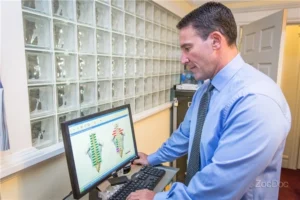
During your evaluation at my Freehold office, I use a 3D foot scanning system to analyze your foot mechanics objectively. You stand on a pressure-sensitive pad while the system captures detailed information about:
- Your arch structure in each foot
- How you distribute weight when standing
- Areas of excessive pressure
- Differences between your two feet
- How your feet may be affecting the structures above them
This technology removes guesswork. Instead of assuming your feet are fine because they don’t hurt, we can see what’s happening at your foundation.
Many patients are surprised by what the scan shows. Their feet don’t bother them, so they never considered them as a source of back pain, but the scan reveals imbalances that help explain why their spine keeps struggling.
Custom Orthotics vs. Store-Bought Insoles
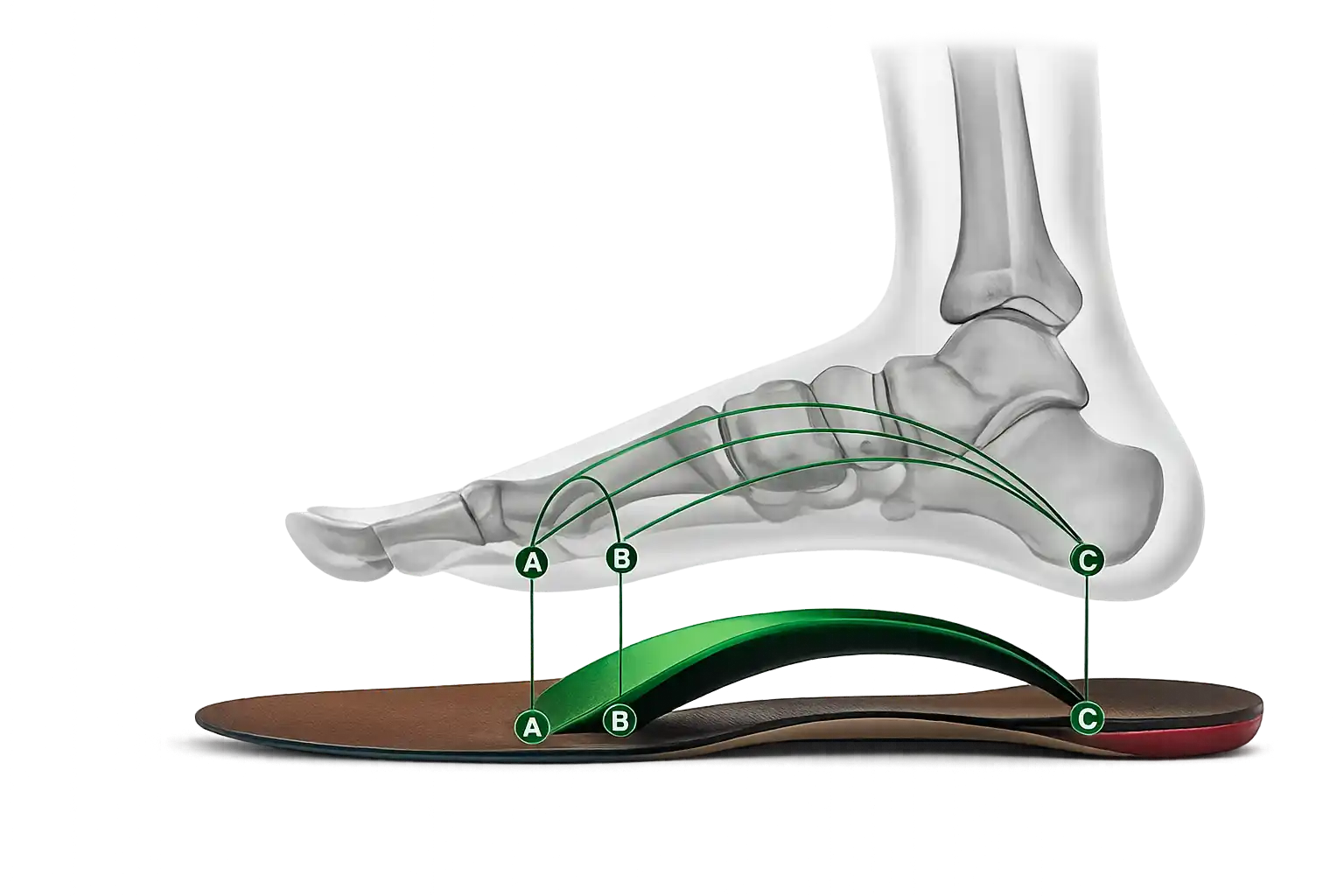
If your scan shows foot mechanics contributing to your back pain, I’ll likely recommend custom orthotics. That raises an obvious question: why custom? Can’t you just buy insoles at the drugstore?
Store-bought insoles are made to fit an “average” foot. They can add cushioning and help some people, but they aren’t designed around your specific arch height, pressure points, and imbalances.
Custom orthotics from Foot Levelers are made from your 3D scan. They support your arches at the height you need and are built around your specific pronation pattern and imbalances, so the support matches your feet rather than someone else’s.
If you’d like to know more about how orthotics and chiropractic care work together, I cover the research in my post on foot orthotics and chiropractic for low back pain.
What to Expect From Orthotic Treatment
Custom orthotics aren’t instant. Your body has adapted to your foot mechanics over years or decades, and it needs time to adjust to better support.
I usually recommend wearing new orthotics for a few hours at first, then gradually increasing wear time over one to two weeks. Some patients feel better right away, while others go through a short adjustment period where things feel different, not worse, before the improvement kicks in.
Orthotics work alongside chiropractic care, not instead of it. I’ll continue addressing spinal restrictions and muscle imbalances while the orthotics help stabilize your foundation, and in my experience, the combination works better than either on its own.
Cases Where Feet Aren’t the Problem
I want to be clear: not all back pain involves foot mechanics. If you have a disc herniation from a lifting injury, orthotics aren’t your main solution. If your back pain comes from spinal stenosis or a specific trauma, addressing your feet may be secondary to other treatment.
That’s why a thorough evaluation matters. I assess your whole situation, including the spine, pelvis, hips, and feet, before recommending treatment. If your feet aren’t contributing, I won’t recommend orthotics just to sell you something. That’s not how I practice.
But if your feet are part of the equation, ignoring them means leaving part of your problem unresolved.
When to See a Doctor First
Get medical care promptly for back pain with fever, unexplained weight loss, a history of cancer, or leg weakness that’s getting worse. Loss of bladder or bowel control, or numbness in the groin, needs emergency care right away. If you have diabetes, see your doctor about any new foot pain, numbness, or sores.
The Athlete Perspective
I played competitive soccer for 28 years, and I learned firsthand how foot mechanics affect performance and injury risk. Good foot function isn’t just about avoiding pain. It’s about how efficiently your body generates and transfers force.
For athletes with ongoing back problems, a foot evaluation should be standard. The repeated impact of running, jumping, and cutting magnifies any foundation problems, so a small issue that causes gradual pain in a less active person can cause bigger problems in someone who trains regularly.
My sports and performance care always includes a foot assessment for this reason. You can’t optimize performance on an unstable foundation.
FAQs About Feet and Back Pain
My feet don’t hurt. Could they still cause back pain?
Yes. Foot problems often cause no foot pain at all while creating strain elsewhere, so the spine may feel the effects even when the feet feel fine.
How long do custom orthotics last?
Quality custom orthotics typically last several years with normal use. I’ll check them periodically and recommend replacement when the support wears down.
Can I wear orthotics in any shoes?
Most custom orthotics fit in athletic shoes and many casual shoes. Very flat dress shoes may not fit them, and I can suggest footwear options for your specific orthotics.
Get Your Foundation Evaluated
If you’ve been dealing with back pain that doesn’t respond to treatment, or pain that keeps coming back no matter what you do, your feet deserve a closer look. Call (732) 780-0044 or schedule an evaluation at Freehold Chiropractic. The 3D foot scan takes just minutes and may reveal why your back keeps bothering you.
Dr. Russell Brokstein is a lifelong Freehold resident and a seasoned chiropractor dedicated to helping patients achieve optimal health through holistic, drug-free care. With a Biology degree from Penn State and a Doctor of Chiropractic from Life Chiropractic College West, Dr. Brokstein’s passion for chiropractic began when his own recurring bronchial issues and a sports-related back injury were resolved through chiropractic adjustments. This transformative experience inspired him to focus on full-body treatments, therapeutic stretching, nutritional counseling, and stress reduction therapies to help others recover faster and perform better. Recognized as one of America’s Best Chiropractors, he leads Freehold Chiropractic with a patient-centered approach that emphasizes thorough evaluations, minimal wait times, and personalized care for athletes and families in Freehold, NJ.