
Trochanteric bursitis is one of the most commonly misdiagnosed sources of hip pain I see at our Freehold practice. Patients often come in convinced they have hip arthritis or need a hip replacement, when the actual problem is inflammation in a small fluid-filled sac on the outside of the hip. Treating it correctly can produce significant relief in weeks, while treating it as arthritis can leave patients suffering for years.
What Is Trochanteric Bursitis?
The greater trochanter is the bony bump you can feel on the outside of your hip. A small fluid-filled sac called the trochanteric bursa sits between this bone and the surrounding tendons and muscles. The bursa’s job is to reduce friction during movement.
When the bursa becomes inflamed, every step, every time you lie on that side, and every transition from sitting to standing can become painful. The condition is properly called greater trochanteric pain syndrome, since recent research has shown the problem usually involves more than just the bursa itself, including the gluteal tendons that attach in that area.
What Trochanteric Bursitis Feels Like
The classic presentation is sharp or aching pain on the outside of the hip that:
- Worsens when lying on the affected side
- Hurts with prolonged standing or walking
- Gets sharp when getting up from a chair
- Can radiate down the outside of the thigh
- Is tender to direct pressure on the bony point of the hip
That last point is important. Patients with true hip joint arthritis usually have pain in the groin or deep in the hip, not on the outer bony point. The location of the tenderness is one of the easiest ways to differentiate these two conditions.
Why Patients Mistake This for Arthritis
Hip pain that worsens with activity and disrupts sleep is what most people associate with arthritis. So when these symptoms show up, patients often assume the worst, and sometimes their doctors do too. Without a careful physical exam pinpointing where the pain is actually coming from, the wrong diagnosis is easy to make.
To make things more confusing, many older adults have some degree of hip arthritis on imaging even when it isn’t the source of their current pain. An X-ray showing arthritis doesn’t prove arthritis is causing the symptoms. The clinical picture matters more than the image.
If you have hip pain but it’s primarily on the outside, not the groin, and it hurts to lie on that side at night, trochanteric bursitis is much more likely than arthritis.
What Causes Trochanteric Bursitis
Gluteal Muscle Weakness
Weak gluteus medius and minimus muscles are one of the most common underlying contributors. When these hip stabilizers don’t do their job, other tissues take up the slack, including the soft tissues around the bursa, leading to chronic irritation.
Biomechanical Imbalances
Leg length differences, foot mechanics like overpronation, and pelvic misalignments all change how forces transmit through the hip during walking. Over thousands of steps, those small alterations create irritation that compounds into bursitis.
Repetitive Activity
Running, cycling, and prolonged walking can all contribute, particularly when biomechanical issues are already present. Patients who suddenly increase activity levels are especially prone.
Direct Trauma
A fall onto the side of the hip or sustained pressure (like sleeping on a hard surface) can directly inflame the bursa.
Lumbar Spine Dysfunction
The nerves that supply the gluteal muscles originate in the lower lumbar spine. When those nerves are irritated by spinal misalignments or disc issues, the gluteal muscles don’t fire properly, which sets up the chain reaction that leads to trochanteric pain.
How We Treat Trochanteric Bursitis at Our Freehold Practice
Effective treatment addresses all the layers contributing to the problem, not just the inflamed bursa. Here’s our approach:
Hip and Pelvic Adjustments
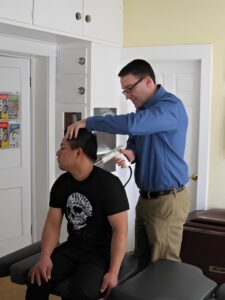
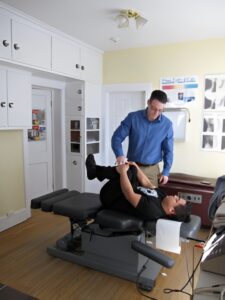
Misalignments in the pelvis and lumbar spine often contribute to the gluteal dysfunction that drives trochanteric pain. Our extremity care includes targeted adjustments to the hip joint itself, the sacroiliac joints, and the lumbar spine to restore proper mechanics.
Gluteal Muscle Rehabilitation
Strengthening the gluteus medius and minimus is essential for long-term resolution. I’ll give you specific exercises designed to reactivate these muscles and build their endurance. This is the part most patients have never been told about, and it’s often what makes the difference between temporary relief and lasting recovery.
Soft Tissue Work
The IT band, tensor fascia latae, and surrounding muscles often become tight and contribute to the compression on the bursa. Targeted soft tissue therapy reduces this tension and gives the bursa space to calm down.
Addressing the Kinetic Chain
Foot mechanics, knee alignment, and overall posture all influence what’s happening at the hip. For patients with significant foot biomechanical issues, custom orthotics may be part of the long-term plan.
Activity Modification
I’ll work with you on modifications to your daily activities and exercise habits while the bursa heals. This isn’t about stopping activity. It’s about adjusting it so you can stay active without continuing to aggravate the inflammation.
What You Can Do at Home
- Avoid sleeping on the affected side: Use a pillow between your knees if you sleep on your other side, which keeps the hip in a neutral position.
- Modify your sitting: Avoid crossing your legs or sitting with your weight shifted to one side.
- Stretch the IT band and hip flexors: But avoid aggressive stretching of the painful area itself, which can worsen inflammation.
- Ice the painful spot: 15-20 minutes a few times daily can help reduce inflammation during the acute phase.
- Do your gluteal exercises: The strengthening work is essential. Skipping it usually means the problem returns.
When Imaging Is Needed
Most cases of trochanteric bursitis don’t require imaging. A thorough clinical examination is usually enough to make the diagnosis. However, imaging may be appropriate if:
- Symptoms aren’t responding to conservative care after several weeks
- There’s concern about a hip joint problem or tear that’s not improving
- The clinical picture is unclear
If imaging is warranted, I’ll discuss that with you and coordinate appropriately.
Frequently Asked Questions
Will my trochanteric bursitis come back?
Recurrence is common when the underlying biomechanical contributors aren’t addressed. Patients who only treat the symptoms with rest or anti-inflammatories often see the problem return. Patients who do the rehabilitation work and address the mechanical factors tend to have lasting results.
Do I need a cortisone injection?
Cortisone injections can provide temporary relief, but they don’t address the underlying causes. They may be useful in certain situations, but they’re rarely a long-term solution on their own. Conservative care addressing the mechanical and muscular contributors is often more effective and durable.
Get the Right Diagnosis for Your Hip Pain
If you’ve been told you have hip arthritis but your pain is really on the outside of your hip, or if you’ve been dealing with side-of-hip pain that isn’t improving, an accurate diagnosis is the first step. Call Freehold Chiropractic at (732) 780-0044 or book your evaluation online. Our $49 new patient exam includes a comprehensive orthopedic and chiropractic assessment.