Your feet are the foundation of your spine. When an arch lowers or a foot rolls inward too much, it can change how your knees, hips, and pelvis line up, which can strain your lower back with every step. Custom foot orthotics support the arch and help balance that foundation, and when they’re combined with chiropractic adjustments, many patients get better and longer-lasting relief from low back pain than with either approach alone.
How Your Feet Affect Your Lower Back
Foot orthotics, along with chiropractic, can greatly improve your low back pain. In my practice, I often trace imbalances in the spine back to the feet.
If the arches in your feet are dropping, they can’t support the weight of your body properly. It’s also common for one arch to sit lower than the other. When an arch drops, the knee on that side tends to rotate inward, which can lower the pelvis on that side and lead to imbalances in the spine.
Walking with these imbalances is like driving a car with misaligned tires. Every step adds a little uneven wear, and over time that strain can show up as low back pain.
Signs Your Feet May Be Contributing

When your arches aren’t supported, your walking mechanics change. If you stand all day, your posture may not stay balanced, which can lead to low back pain and even neck pain. Unsupported arches can also cause foot pain, heel pain, plantar fasciitis, and heel spurs.
Common red flags of overpronation, when the foot rolls inward too much, include:
- Flattened or lowered arches, especially when standing
- Heels that tilt inward when viewed from behind
- Knees that turn inward when you stand or walk
- Feet that point outward noticeably
- Shoes that wear down faster on the inner edge
If you notice several of these, you could benefit from a foot evaluation and possibly custom orthotics.
Why Custom Fitting Matters
Foot orthotics help balance the feet and prevent the postural changes that can lead to back pain. Quality orthotics are made for each patient, because everybody’s feet are different, so it’s important to know how your practitioner fits you.
In the past, many orthotics were made by having a patient lie down while a cast was made of each foot. The problem is that this doesn’t show what happens to your arches when you stand and put weight on them.
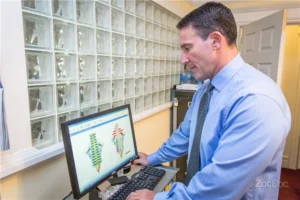
Today, many practitioners use a scanner that you stand on, which shows where your arch is dropping and needs the most support. A custom-made foot orthotic built this way helps stabilize the arch, spread your weight more evenly, absorb shock, reduce overpronation, and support better balance through the spine.
What the Research Shows
Studies have looked at how foot orthotics may help relieve back pain. A 2013 study in the Journal of Chiropractic Medicine, Effects of customized foot orthotics on reported disability and analgesic use in patients with chronic low back pain associated with motor vehicle collisions, found that patients with chronic low back pain after car accidents who used customized orthotics reported less disability and used fewer pain medications.
Another study suggested that foot orthotics combined with chiropractic treatment brought additional benefits for people who stand at work, with better improvements in pain, function, and quality of life than orthotics alone. You can read more here: Chiropractic adjustments and orthotics reduced symptoms for standing workers.
More recent reviews suggest custom orthotics may reduce pain and disability in people with chronic low back pain who also have flat or overpronated feet, though the research is still growing. That’s why I recommend orthotics based on what your feet actually show, not for everyone with back pain.
Why Chiropractic and Orthotics Work Well Together
When I adjust the spine, feet, ankles, and knees, joint motion and alignment improve and muscle strain decreases, which helps the feet adapt to orthotics more quickly.
I also find that orthotics help support the adjustments. By balancing the foundation of the feet and limiting overpronation, they help keep the pelvis and spine from being pulled out of balance again with every step.
At Freehold Chiropractic, I help patients with lower back pain by adjusting the spine and checking for the red flags of foot pronation that can lead to back pain. It’s important to find a chiropractor who adjusts the ankles, feet, and knees and fits patients for orthotics designed to stabilize the spine and pelvis.
Who Benefits Most
- People who stand or walk for long hours at work
- Patients whose back pain keeps returning after adjustments
- Runners and active adults with flat or overpronated feet
- Anyone with foot, heel, or knee pain along with low back pain
When to See a Doctor First
See a medical provider promptly for back pain with fever, unexplained weight loss, a history of cancer, or leg weakness that’s getting worse. Loss of bladder or bowel control, or numbness in the groin, needs emergency care right away. People with diabetes and new foot pain or sores should also see their doctor.
Frequently Asked Questions
Can flat feet really cause back pain?
They can contribute. Flat or overpronated feet can change how the knees, hips, and pelvis line up, which may add strain to the lower back.
Are custom orthotics better than store-bought inserts?
Store-bought inserts can help some people, but custom orthotics are made from a scan of your own feet while standing, so they match your arch and the way you bear weight.
How long does it take to get used to orthotics?
Most people adjust within one to two weeks. Start by wearing them a few hours a day and build up gradually.
I keep up with current research to give my patients the best care possible so they can recover and get back to their normal activities. If low back pain has been slowing you down in Freehold, call Freehold Chiropractic at (732) 780-0044 or contact us online to schedule an evaluation. For more about my background and practice, visit my about page.
Dr. Russell Brokstein is a lifelong Freehold resident and a seasoned chiropractor dedicated to helping patients achieve optimal health through holistic, drug-free care. With a Biology degree from Penn State and a Doctor of Chiropractic from Life Chiropractic College West, Dr. Brokstein’s passion for chiropractic began when his own recurring bronchial issues and a sports-related back injury were resolved through chiropractic adjustments. This transformative experience inspired him to focus on full-body treatments, therapeutic stretching, nutritional counseling, and stress reduction therapies to help others recover faster and perform better. Recognized as one of America’s Best Chiropractors, he leads Freehold Chiropractic with a patient-centered approach that emphasizes thorough evaluations, minimal wait times, and personalized care for athletes and families in Freehold, NJ.